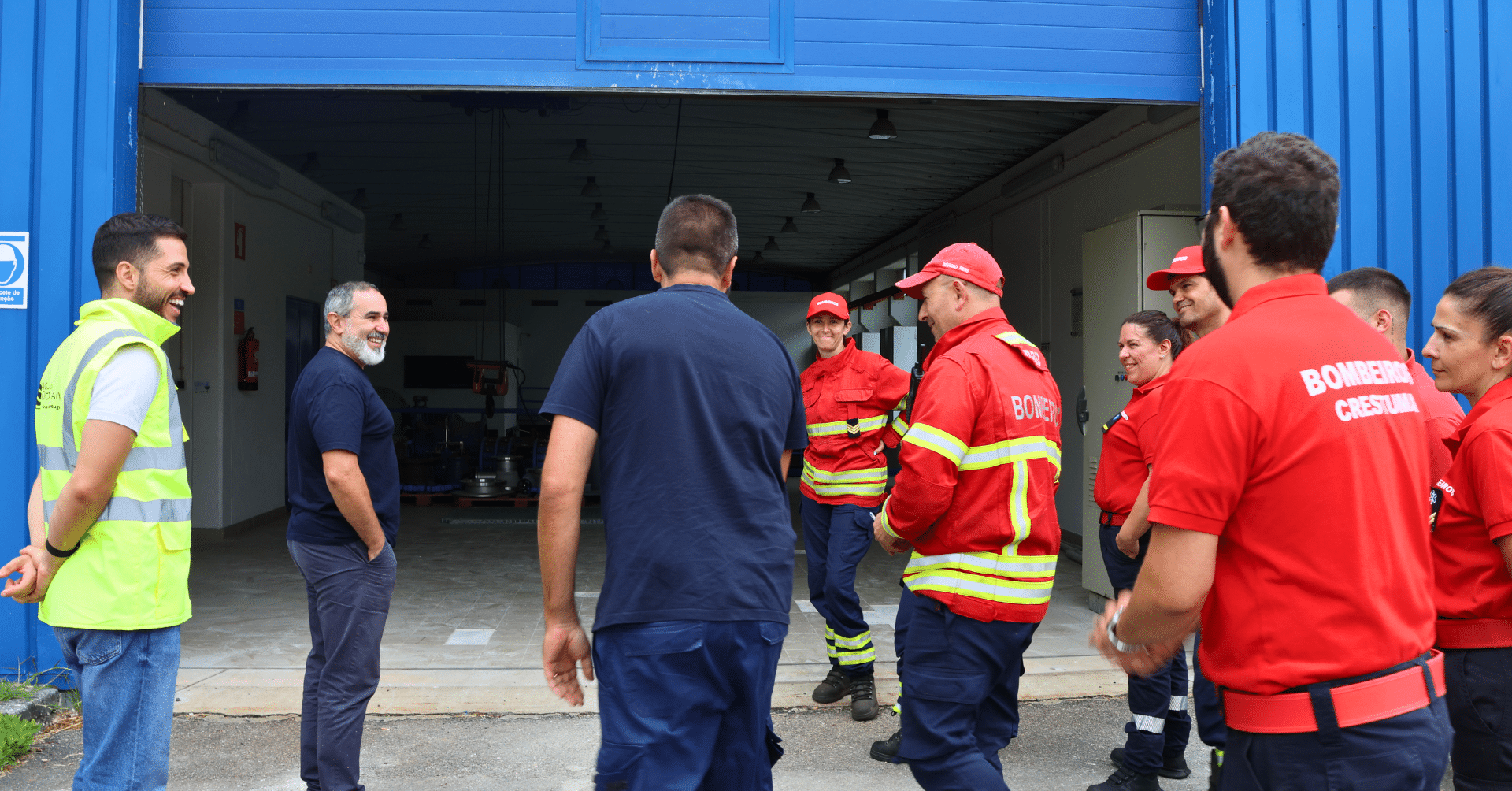
The Corporate Sustainability of Águas do Douro e Paiva has continued the program of visits to the infrastructures of the water supply system by the region’s fire brigades, in this second phase involving the Volunteer Firefighters of Areosa-Rio Tinto, Crestuma, Arouca and Rebordosa, according to a statement.
According to the same source, the initiative intends to reinforce the brigades’ knowledge of the facilities, their respective access routes, and their main characteristics, resuming contacts and visits already carried out in the past and contributing to a faster, safer, and more effective intervention whenever the emergency services are called to act.
The visits were accompanied by Nuno Brasileiro, from Corporate Sustainability, and by Armando Rocha, António Gomes, Daniel Castro, Eusébio Matos, Fábio Fontes Martins, Nuno Castro, Paulo Póvoas and Vítor Pereira, ensuring the framing of the different infrastructures and the conditions relevant for a possible intervention.
The Volunteer Firefighters of Areosa-Rio Tinto visited the Monte Pedro Reservoir and the Vale Ferreiros Pumping Station, while the Volunteer Firefighters of Rebordosa visited the Feiteira Pumping Station.
In Crestuma, the visit covered the Largo do Santo chlorination facility, the Lagoa Reservoir and Pumping Station, the Upper Marquinho Reservoir, and the Seixo Alvo installations, which include a reservoir, a pumping station, and chlorination.
In turn, the Volunteer Firefighters of Arouca visited the Souto Redondo and Provizende reservoirs, the Escariz Reservoir and Pumping Station, and the Abelheira Reservoir. In a territory marked by challenging topography and an extensive forested area, knowledge of the infrastructures and their access routes assumes particular relevance in preparation for any potential intervention.
For Mariana Ferreira Macedo, Executive Director of Águas do Douro e Paiva, “safety is built before the emergency. If our infrastructures fail, the ability of the firefighters themselves to respond is also compromised. We have a common asset of essential importance to protect: water. Knowing in advance our facilities, their respective access routes and their characteristics allows us to anticipate scenarios, coordinate the response with those on the front line, and contribute to ensuring the continuity of supply. I thank the fire brigades for their availability and commitment in this joint effort, which allows us to be better prepared to respond when every minute counts.”
The program will continue, with plans for new visits to other fire brigades in the company’s area of intervention.