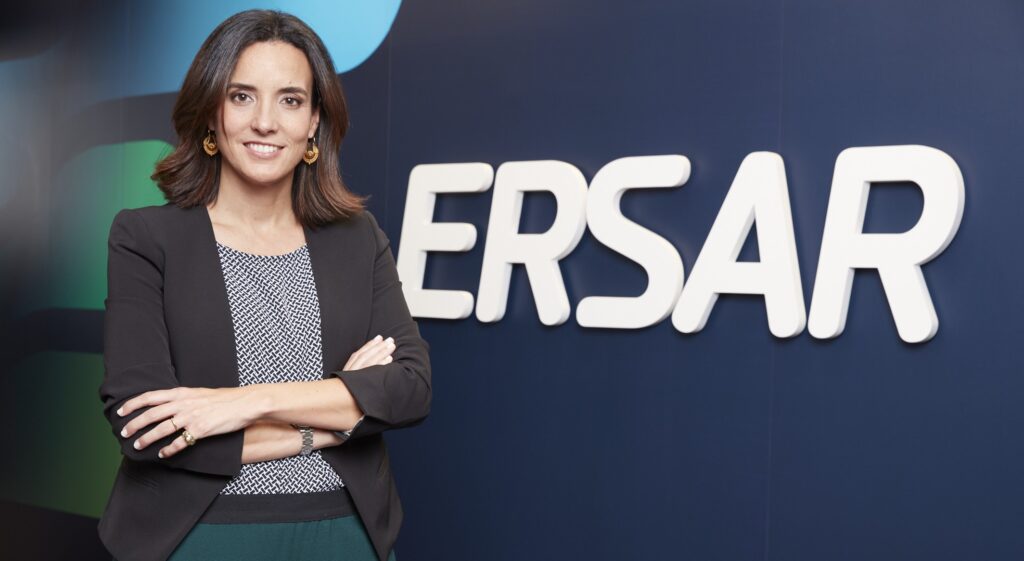
Climate change and the management of networks continue to challenge supply systems in Portugal. “Drought is today one of the most critical environmental risks for water supply systems: it reduces availability and increases pressure on infrastructures that were not designed for such severe scenarios,” says Vera Eiró, chair of the ERSAR Board, in an interview with Green Savers, explaining that “scarcity also affects quality: with less water available, contaminant concentrations can rise, requiring more treatment and elevating operating costs.” The official stresses that “every person is part of the solution,” reminding that civic participation and daily consumption awareness are essential to ensure safe and sustainable water.
Despite the challenges, the leader sees clear opportunities for improvement and resilience. As efficiency and planning by the managing entities are strengthened, “the resilience of the sector depends on our ability to plan, invest and keep the focus on service quality.” Vera Eiró also highlights the importance of citizen awareness: “It is worth valuing tap water — safe, controlled and, as a rule, more sustainable — and adopting simple efficiency practices, such as avoiding waste and following information from municipal services.”
World Water Day is a moment of global reflection. What do you consider to be today the main challenges of water management in Portugal?
Water challenges in Portugal fit into a global reality that transcends our borders, with increasing pressure on water resources. In Portugal, we face structural challenges: climatic variability, with more frequent and prolonged droughts and more intense precipitation events, such as the recent “storm train,” aging infrastructures, water losses in networks and the need to reinforce the resilience of urban systems.
I highlight two major challenges in Portugal: to improve coordination among all stakeholders, public and private, who use water, clarifying priorities and decision rules to manage, when necessary, scarcity or excess, and to reinforce the resilience of urban water systems
Despite these challenges, the sector’s latest data, gathered in ERSAR’s 2025 Annual Report on Water and Waste Services (RASARP 2025), show significant progress over the last decades, which remains linked to major structural questions related to competing uses, efficiency, infrastructure renewal and economic sustainability. In this context, I highlight two major challenges in Portugal: to improve coordination among all stakeholders, public and private, who use water, clarifying priorities and decision rules to manage, when necessary, scarcity or excess, and to reinforce the resilience of urban water systems.
As regulator, in what way does ERSAR contribute to guaranteeing universal access to quality water and sanitation?
ERSAR has a central role in ensuring universal access to water supply and sanitation services, guaranteeing they are provided safely, reliably and in compliance with legal and technical requirements. The results of the RASARP reflect progress that also mirrors ERSAR’s ongoing regulatory action. For example, the national indicator of “safe water” has remained at an excellent level, close to 99%. This result rests on a robust system of regulation and control, with more than 600 thousand laboratory analyses per year, strengthening consumer confidence. In terms of service access, the physical coverage of water supply is about 97% of the population and sanitation around 90%. Effective uptake has also increased, approaching 90% in both services, a target achieved for the first time in 2025.
ERSAR continuously monitors the performance of the managing entities, tracking service quality, compliance with legal and contractual obligations and the evolution of efficiency and sustainability indicators. This work helps identify asymmetries, guide investment and reinforce the protection of public health and the environment. Inspectorate activity is also decisive. ERSAR conducts inspections and autonomous laboratory campaigns and, when necessary, initiates infringement proceedings, contributing to correcting non-compliance and promoting continuous improvement. In short, through technical, economic and service quality regulation, through monitoring and by promoting transparency, ERSAR contributes to citizens having safe water at the tap and reliable sanitation.
Real water losses in networks remain high, although there is a slight decrease compared to the previous year, showing the potential for improvement in network management. Another challenge is the state of the infrastructure. The rehabilitation of supply mains is low, when it would be desirable to be higher; in sewer collectors, it is even lower
Nevertheless, weaknesses in efficiency persist. Real water losses in networks remain high, although there is a slight decrease compared to the previous year, showing the potential for improvement in network management. Another challenge is the state of the infrastructures. The rehabilitation of supply mains is low, when it would be desirable to be higher; in sewer collectors, it is even lower. This deficit is more evident in low-system networks, mostly municipal, where many networks already show ageing. ERSAR works to ensure these data are reliable, known and used as a reference, helping managing entities to define investment priorities and improvement targets and to serve today’s and tomorrow’s consumers better.
Climate change has been intensifying periods of drought and water scarcity. What impact do these changes have on the sustainability of supply systems?
Climate changes are intensifying extreme phenomena across Europe. Drought is today one of the most critical environmental risks for supply systems: it reduces availability and increases pressure on infrastructures that were not designed for such severe scenarios. The report “Overheated and Underprepared: Europeans’ Experience of Living with Climate Change” (EEA, 2026) confirms that drought and water scarcity already affect millions of Europeans. For Portugal, the EEA highlights high exposure to climate risks, with prolonged droughts, lower reservoir storage, and significant economic impacts, increasing pressure on water security, including for human consumption.
Compared to the European average, Portugal stands out for the higher frequency and duration of dry periods and the vulnerability of several river basins, with significant impacts on agriculture and ecosystems, which compete with urban uses. Scarcity also affects quality: with less water available, contaminant concentrations can rise, requiring more treatment and raising operating costs
Compared to the European average, Portugal stands out for the greater frequency and duration of dry periods and the vulnerability of several river basins, with significant impacts on agriculture and ecosystems, which compete with urban uses. Scarcity also affects quality: with less water available, contaminant concentrations can rise, requiring more treatment and raising operating costs.
What role do you attribute to efficiency in water management and the reduction of losses in supply networks?
Efficiency is a pillar of the sector’s sustainability. Reducing losses preserves the resource in a context of scarcity, improves economic efficiency and reduces energy and environmental costs. It is also essential to adapt services to more extreme climatic scenarios, with greater reliability, without compromising water quality.
The citizens’ trust in water services is essential. How would you assess the evolution of the service quality provided in Portugal in recent years?
Confidence in tap water has been consolidating, with indicators such as “safe water,” service uptake being low and the use of treatment infrastructures showing a positive trajectory. However, despite progress, there remain areas with room for improvement
Portugal currently shows very high standards of drinking-water quality, the result of decades of investment, greater professionalization of managing entities and regulatory requirements. Confidence in tap water has been consolidating, with indicators such as the “safe water” indicator, service uptake being low and the use of treatment infrastructures showing a positive trajectory. However, despite advances, there remain areas with room for improvement, namely in service uptake, rehabilitation of aging infrastructures and reduction of losses, to ensure the future sustainability of the service.
How important are data, monitoring and transparency in the regulation of water and sanitation services?
Data and knowledge are at the core of modern economic regulation. Access to updated and reliable information and integrated monitoring systems is decisive to plan effective policies and to act where weaknesses persist, such as in the rehabilitation of aging infrastructures and the reduction of losses. On the other hand, the data resulting from regulatory action are equally fundamental in a logic of continuous improvement by sector participants and, of course, in terms of transparency and promoting user trust.
The extreme climatic phenomena we have lived through in Portugal reinforce the perception that water is a vital and scarce resource
Do you consider that consumers are today more aware of the value of water and the need for responsible consumption?
Yes. The extreme climate phenomena that we have witnessed in Portugal reinforce the perception that water is a vital and scarce resource. Still, there is room for greater engagement and behavioral changes, accompanied by public policies that recognise and signal this vital and scarce character of water.
What message would you like to leave to municipalities and managing entities on this World Water Day?
The main message is one of shared commitment and cooperation. The current challenges require ongoing investment, innovation and institutional cooperation. The sector’s resilience depends on our ability to plan, invest and keep the focus on service quality.
And what appeal would you make to Portuguese citizens about how they use and value water in their daily lives?
Each person is part of the solution. Water is a precious and finite resource: it is worth valuing tap water — safe, controlled and, as a rule, more sustainable — and adopting simple efficiency practices, such as avoiding waste and following information from municipal services. I would also add the importance of civic engagement: caring about water and sanitation services and, through voting, choosing decision-makers who treat them with technical rigor and economic sustainability in the short, medium and long term.
Each person is part of the solution. Water is a precious and finite resource: it is worth valuing tap water — safe, controlled and, as a rule, more sustainable — and adopting simple efficiency practices, such as avoiding waste and following information from municipal services
Looking to the future, what are ERSAR’s strategic priorities to ensure water services that are more resilient, fair and sustainable?
In 2026, ERSAR’s priority is digital transformation. As regulator, we interact with hundreds of entities and receive and validate hundreds of thousands of data. A new portal, with secure and real-time interaction with regulated entities, ERSAR staff, consumers and other stakeholders, will be critical to improving processes, reporting quality and sector knowledge. We also keep constant priorities: protecting the natural resources that sustain these services, promoting the financial sustainability of managing entities and reinforcing consumer protection. Since these are essential services, where citizens cannot choose the provider, it is important to ensure quality and equity of access across mainland Portugal for everyone.