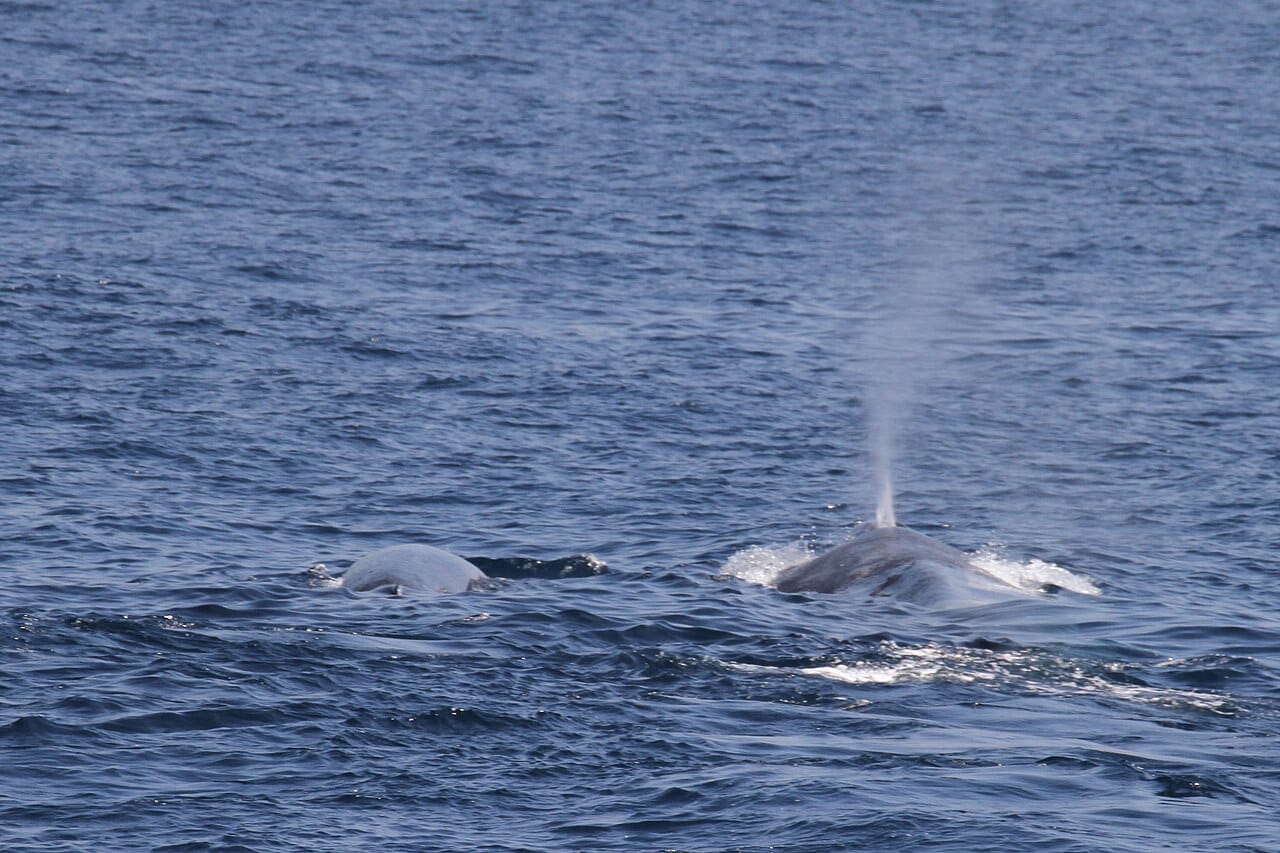
Many species of whales were pushed almost to extinction before the international prohibition of commercial whaling in 1986.
A new study reveals that, four decades later, the two largest whales in the world are recovering in the southeastern region of the Atlantic Ocean, with the increase in sightings, which remain rare but more frequent than in recent decades.
In an article published in the journal ‘African Journal of Marine Science, researchers from South Africa and Namibia say that the number of sightings of blue whales (Balaenoptera musculus) and fin whales (Balaenoptera physalus) increased “significantly” on the Namibian coast and the western coast of South Africa.
By analysing sighting data from 1964 to 2025, they found that 95% of observations occurred after 2012.
“Our results provide important evidence that, little by little, these giants of the ocean are recovering from the devastating impact of 20th-century commercial whaling, which pushed them to the brink of extinction,” says Bridget James, the study’s first author.
“Sightings remain rare, but they are becoming more frequent than in decades past, and, with sustained protection, there are reasons to believe that this recovery can continue,” she stresses.
The study focuses on two subspecies of these great whales: the Antarctic blue whale (Balaenoptera musculus intermedia), critically endangered, and the Antarctic fin whale (Balaenoptera physalus quoyi), classified as vulnerable to extinction.
Between 1913 and 1978, both suffered major population declines due to intense hunting they were subjected to. The Antarctic blue whales have a current population that is only 3% of the population they had before the whaling era, with slow growth of between 5% and 8% per year today.
For their part, the Antarctic fin whales have already recovered more than 30% of their pre-whaling population and grow at an annual rate of 4%-5%.
Scientists point to difficulties in studying these whales because they travel long distances and spend much of their lives in the remote waters of Antarctica. Therefore, data on their migratory routes and possible breeding grounds, including in the southeastern Atlantic, remain scarce.
“Historical whaling data suggest that the southeastern Atlantic was, in the past, an important nursery area for both blue whales and fin whales,” explains James. “But until now we had very little consolidated information on their more recent presence in this region,” she adds, a gap that this study aims to fill.
Despite these signs of improvement, researchers warn that blue whales and fin whales continue to face serious threats to their survival, including ship strikes, deaths in fishing nets, underwater noise pollution, chemical pollution and climate change.
“Signs of a return to the southeastern Atlantic do not mean a full recovery of blue whales and fin whales, and these populations still have a long way to go to reach their historical numbers,” stresses the study’s first author.
Therefore, the team considers that the observed recovery points to the great resilience of these two large ocean beings, a resilience that does not guarantee the whales’ future and that needs to continue to be protected and strengthened.