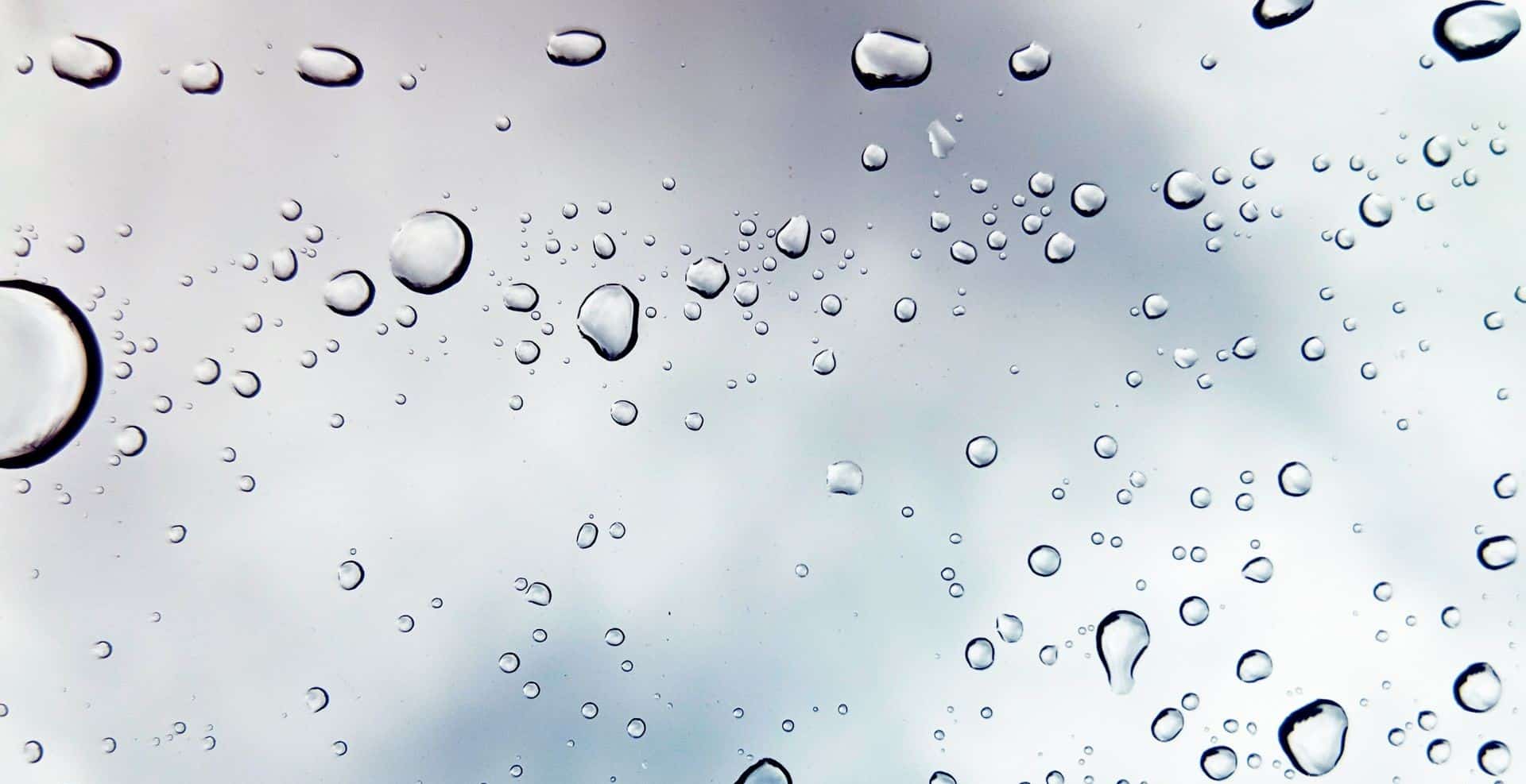
Researchers at Curtin University have developed a new technique to make glass water-repellent, a feature that could enhance vehicle safety, reduce cleaning costs for buildings, and improve filtration systems.
The research, published in the prestigious journal Advanced Functional Materials, shows how an innovative, non-toxic process that uses ultrasonic waves can alter the surface of glass, making it hydrophobic (water-repellent) or electrically charged.
The principal investigator, Associate Professor Nadim Darwish, an ARC Future Fellow at Curtin’s School of Molecular and Life Sciences (MLS), explains that the process uses ultrasonic waves to trigger a chemical reaction that permanently alters the glass surface.
“The sound waves create microscopic bubbles in a solution of diazonium salt, which then rapidly collapse, creating small bursts of heat and pressure,” notes Darwish.
“This triggers a reaction that forms a stable organic layer on the glass, making it permanently water-repellent or positively charged, depending on the type of diazonium salt used. Unlike conventional coatings, which wear away over time, our method creates a chemical bond at the molecular level, making it far more durable and environmentally friendly,” he adds.
“The study’s co-author, Tiexin Li, an Associate Researcher at Curtin’s School of MLS, said that the ability to modify glass surfaces in a simple and sustainable way has far-reaching implications across multiple industries.”
“Glass is used everywhere—from cars and buildings to industrial filters—but its natural tendency to attract water limits its performance,” Li states.
“Unlike traditional coatings, this film does not peel off, does not dissolve in water, and does not deteriorate, making it ideal for real-world applications where reliability and durability are essential. This could mean clearer windshields in heavy rain and solar panels that stay dust-free,” he adds.
“Co-author Zane Datson, also from Curtin’s School of MLS, highlights another unexpected benefit—the modified glass’s ability to attract bacteria, fungi and algae.”
“This is very exciting, as we can tailor the properties of the glass for specific uses, including in advanced filtration systems and biofuel production,” says Datson.
“For example, coated glass can help bind yeast in beer production, capture bacteria in wastewater filtration systems, or act as a chemical barrier to microorganisms in air filters,” he adds.
The research team is now seeking industrial partners to test and scale up the technology, particularly in the automotive, construction, and environmental sectors.
The full article titled “Sonochemical Functionalization of Glass” (Sonochemical functionalization of glass) can be accessed online here.