The Secretary of State for Civil Protection of Timor-Leste, Domingos Mariano Reis, argued yesterday that it is necessary to inform the population about the effects of the El Niño phenomenon, with prolonged periods of drought and changes in precipitation patterns.
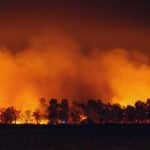
“We must raise awareness among the population about how to preserve food and water. We also appeal that land burning should not be carried out, nor should wildfires be caused,” said the Secretary of State for Civil Protection, Domingos Mariano Reis.
The official spoke to journalists after participating in a seminar on the risks of natural disasters, held as part of the celebrations of World Day for Disaster Risk Reduction (DMRRDN), to be observed on October 13 in Suai.
For Domingos Mariano Reis, awareness-raising is essential to sensitize the population and promote preventive actions, namely adequate preparation to respond to the impacts of El Niño in Timor-Leste.
The Secretary of State explained that, according to reports from the civil protection authorities of the Lospalos municipality, the effects of El Niño have already begun to be felt in that region, with water and food available for animals on Jaco Island being reduced.
“We all know that when a prolonged dry period occurs, water decreases and agricultural production declines. This has a direct impact on the health of people. Pregnant women will have less food available and children will also suffer from food shortages,” warned the Secretary of State for Civil Protection.
The World Meteorological Organization warned in early September that the El Niño phenomenon is “firmly established” and is expected to intensify even further in the coming months, reaching a “very strong” intensity with a probability “close to 100%” of lasting until February 2027.
El Niño is a natural phenomenon that recurs every two to seven years. The surface waters of the central and eastern equatorial Pacific begin to warm in spring, leading to major changes in wind patterns, pressure, and precipitation worldwide in the following months.
Although every El Niño is different, the phenomenon has historically caused or intensified droughts and fire risks in parts of the Amazon, Central America, Indonesia, and Australia, disrupted the monsoon in India, and brought torrential rains to East Africa.