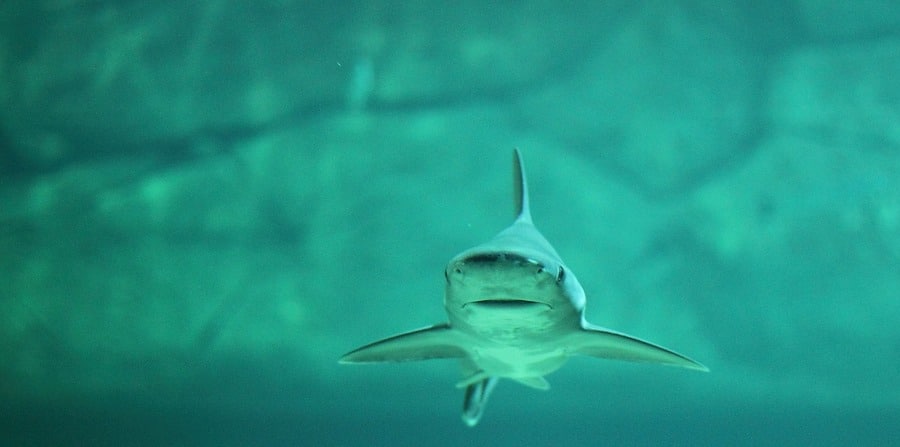
There are, worldwide, more than a thousand species of rays and sharks swimming in the ocean — along the Portuguese coast, about 117, according to the World Wildlife Fund For Nature (WWF). In addition to being large predators, sharks are mysterious and fascinating animals that have lived on our planet for about 400 million years.
Sharks have six senses with characteristics sometimes identical to humans, and other times completely different. All these sensory systems are important for their survival. Today we present three of them to you, based on the explanation of the scientist and executive director of the Ocean First Institute, Mikki McComb-Kobz, who collaborates with OCEARCH, a United States-based non-governmental organization that studies sharks in the open sea.
First, vision. Sharks have mobile pupils, which allow them to control the amount of light entering their eyes, according to their needs and the environment in which they are. In addition, they have cones and rods (cells in the eyes) like ours, which lets them perceive different colors, and the position of their eyes gives them depth perception.
As for the sense of smell, it is known that the nostrils are not connected to the throat or mouth; they are independent. When water enters, it goes to the olfactory system, and the odors attach to the nostrils, allowing them to smell everything that is in the water.
Electroreception, an electro-sensory system exclusive to sharks, allows them to detect all living beings present in the water. It is also thought, according to the researcher, that this sense may play a role in their underwater navigation.