The counterintuitive setting that derails summer cooling
When outdoor heat surges, many owners make a sincere choice that quietly undermines their fridge’s stability. They turn the dial to a lower number, imagining a cooler temperature, but that number is actually a power level. On most analog controls, a higher number means stronger cooling, while a lower number eases the effort.
This small misunderstanding creates a big gap between expectation and actual performance. In hot weather, the sealed system faces higher ambient loads, and weaker settings stretch the compressor’s duty cycle. Food warms unevenly, while the unit seems oddly more noisy, yet less effective.
The surprising consequence is elevated energy use and poorer food safety. The compressor cycles more often without achieving stable cabinet temperatures, creating warm pockets where perishables degrade faster.
What the dial really tells you
Analog dials rarely display true degrees, only relative cooling strength. The number controls how aggressively the thermostat responds, not the cabinet’s precise setpoint. In summer, systems need more headroom to overcome ambient heat, infiltration, and door-opening loads.
Lowering the number during a heatwave throttles that headroom, a well-meaning but counterproductive move. The machine spends longer at marginal capacity, letting temperatures drift above safe ranges. That drift is subtle, but its effects on food quality and compressor longevity are not.
“Setpoints are only half the equation; the room sets the challenge, the machine sets the pace.” This perspective reframes summer tuning, shifting focus from numeric labels to real behavior in a warm kitchen.
Ventilation and maintenance under summer stress
Fridges reject heat into the room, and summer air already carries more energy. Without clear paths around the back and top, hot air recirculates, raising condenser temperatures and throttling cooling capacity. Typical guidance cites at least 5 cm behind and 10 cm above, creating a chimney-like draft.
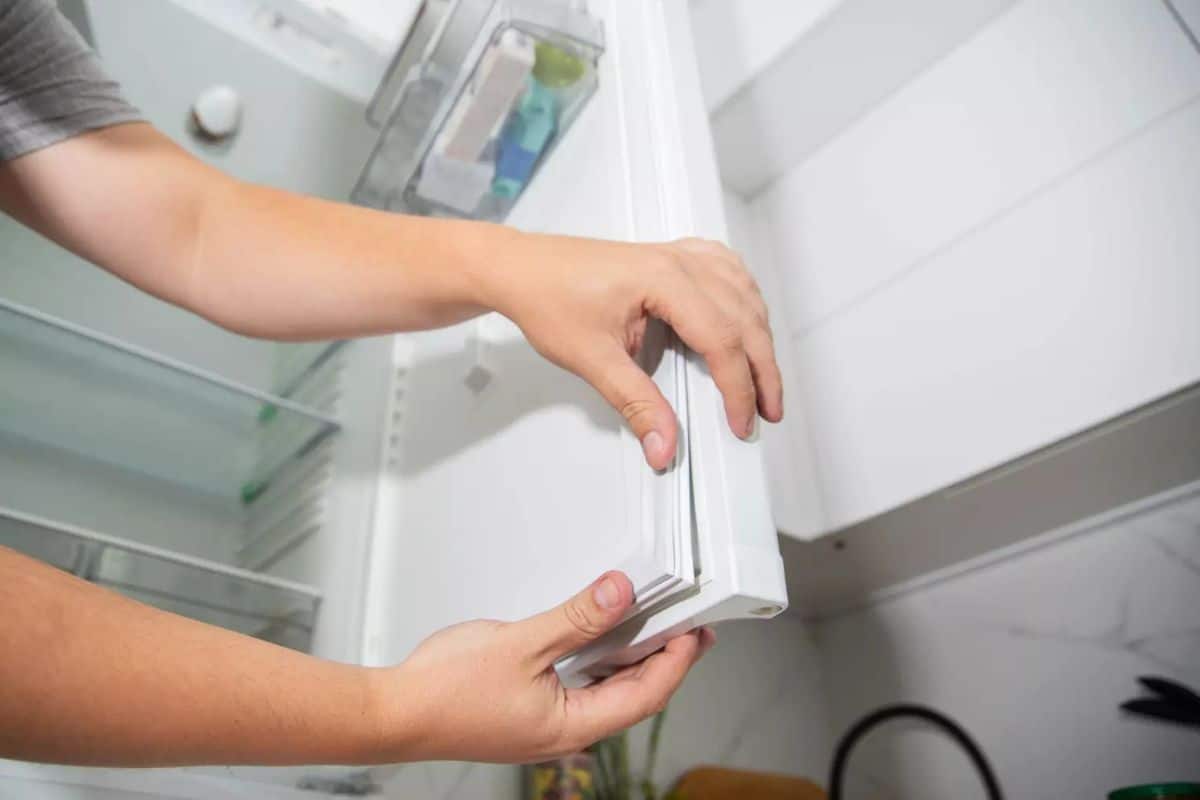
Dust on condenser coils acts like a thermal blanket, forcing higher compressor pressures for the same heat rejection. Over weeks, that penalty becomes audible as longer cycles and a warmer cabinet average. Door gaskets also stiffen with heat, allowing tiny leaks that invite moist air.
- Rear and top clearances: crucial for steady heat escape
- Clean condenser surfaces: necessary for efficient transfer
- Intact, flexible gaskets: vital for moisture and heat control
- Reasonable loading: important for even airflow and cold retention
Listening for performance, not just looking at numbers
The compressor is a built-in diagnostic, announcing workload with rhythm and tone. Short cycling can signal control confusion, while long, steady runs with stable cabinet temperatures often indicate balanced demand. A small increase in cooling power should prompt a firmer, more confident start, followed by consistent cabinet pull-down.
Fans tell their own story, especially in no-frost designs that manage coil defrost. Intermittent fan operation aligned with compressor runs suggests synchronized airflow and heat exchange. Disconnected patterns hint at restricted paths or drifting control logic.
Inside the cabinet: zones that fight the heat
Static and semi-static systems form predictable gradients that can be used to protect foods. Dense cold air settles low, creating the coldest zone near the bottom shelves, where raw proteins fare best. Mid-shelf areas maintain steadier, slightly warmer conditions, ideal for dairy and cooked leftovers.
Crisper drawers offer moderated temperatures and elevated humidity, preserving produce with less desiccation. The door endures frequent thermal swings, suiting condiments, juices, and robust beverages. Recognizing these zones preserves texture, nutrients, and safety, especially when heat challenges daily habits.
- Bottom shelves: 0–3°C, for raw proteins under tighter control
- Middle shelves: 4–6°C, for dairy and ready-to-eat items
- Crispers: 8–10°C with humidity, for fresh produce
- Door racks: variable, for resilient, high-acid goods
Humidity, load, and the summer kitchen
High humidity increases latent loads, forcing more ice to form on cold surfaces and stealing capacity from sensible cooling. Every door opening admits warm, moist air, demanding extra runtime and longer post-opening recovery. Heavier stocking can stabilize thermal mass, but overfilling blocks internal circulation.
Ambient management matters as much as any dial. Ovens, dishwashers, and sunlit windows raise surrounding temperatures, nudging the fridge toward steeper gradients. Modest shade, gentle ventilation, or relocating heat sources reduces invisible strain and tightens cabinet control.
The summer takeaway: decode the behavior, not the label
Summer turns a refrigerator into a living system, balancing ambient heat, internal airflow, and compressor capacity. The innocent act of lowering the dial to a smaller number throttles cooling power at the exact moment more is needed. Better outcomes come from reading the machine’s signals—sound, cycle length, and stable food temperatures—rather than trusting a misleading marker.
A fridge that breathes, stays clean, and uses its internal zones wisely will ride out heat with quiet confidence. In that light, the “right” action isn’t changing a number, but understanding what the number truly means.