Habitat restoration is considered one of the main ways to recover ecosystems degraded by direct human action or by the effects of climate change.
Reforestation projects are frequent actions within these efforts, and have clear ecological and social benefits, but must only take place in zones where forests are the indicated habitats.
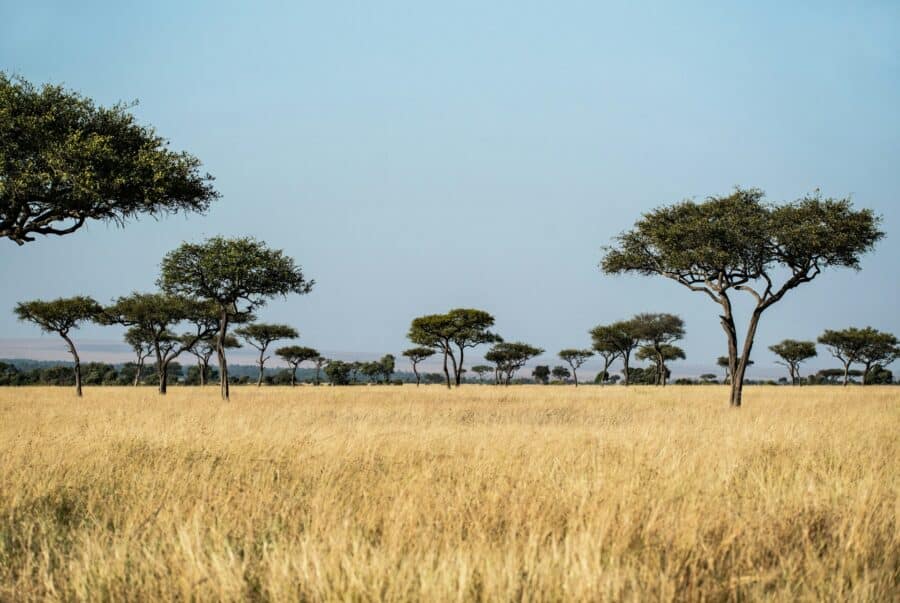
A study led by scientists from the University of Liverpool, in the United Kingdom, notes that reforestation and ecological restoration are not synonyms, and focuses on the case of recovering non-forested areas in Africa, where savannas and grasslands could disappear to make way for forests.
In a article published in the journal ‘Science’, the authors argue that planting trees in non-forest habitats, which have structures, compositions and functioning distinct from forests, could threaten the long-term subsistence and survival of wildlife, such as rhinoceroses and wildebeests, as well as the local human communities that depend on these ecosystems.
“Ecosystem restoration is necessary and important,” acknowledges Catherine Parr, the first author, but this cannot be done without taking into account the specific characteristics of each system.
“Non-forest systems such as savannas are erroneously classified as forest, and, as such, it is assumed they need to be restored with trees,” she notes, arguing that it is urgent “to revisit definitions so that savannas are not confused with forests, because increasing trees is a threat to the integrity and persistence of savannas and grasslands.”
The research, and the cautions it raises, take place against the backdrop of the so-called ‘Bonn Challenge’, launched in 2011 by the German government and the International Union for Conservation of Nature (IUCN), whose objective is to restore 350 million hectares of degraded and deforested landscapes by the end of this decade.
However, the researchers say there is reason for concern when ecological restoration is confused with reforestation. “Concerns have been raised about the fact that a focus on tree-based restoration, combined with the incorrect classification of herbaceous ecosystems, could lead to inadequate restoration and the destruction of intact and ancient ecosystems,” they write in the article.
Nicola Stevens, from the University of Oxford and who also co-authors the work, notes that “the urgency” to restore habitats and ecosystems through tree planting “is stimulating the funding of inadequately evaluated projects that are very likely to have negligible carbon sequestration benefits and will cause potential social and ecological harms.”
Although this study focused on Africa, the researchers say that savannas and grasslands in countries such as Brazil and India may be at the same risk, reinforcing the warning that ecological restoration and reforestation are not one and the same.