Ant colonies are considered among the most complex societies in the animal kingdom. Made up of castes in which individuals specialize in particular tasks, they are governed by a queen who ensures the future of the group, and supported by numerous worker ants who guarantee the functioning of the ant colony.
But this has not always been the case. Two researchers from the University of Cambridge, in the United Kingdom, analyzed the characteristics, diets, and social lives of larvae from more than 700 species of ants and believe they have discovered what may have enabled differentiation within colonies, and thus given rise to increasingly complex and specialized societies.
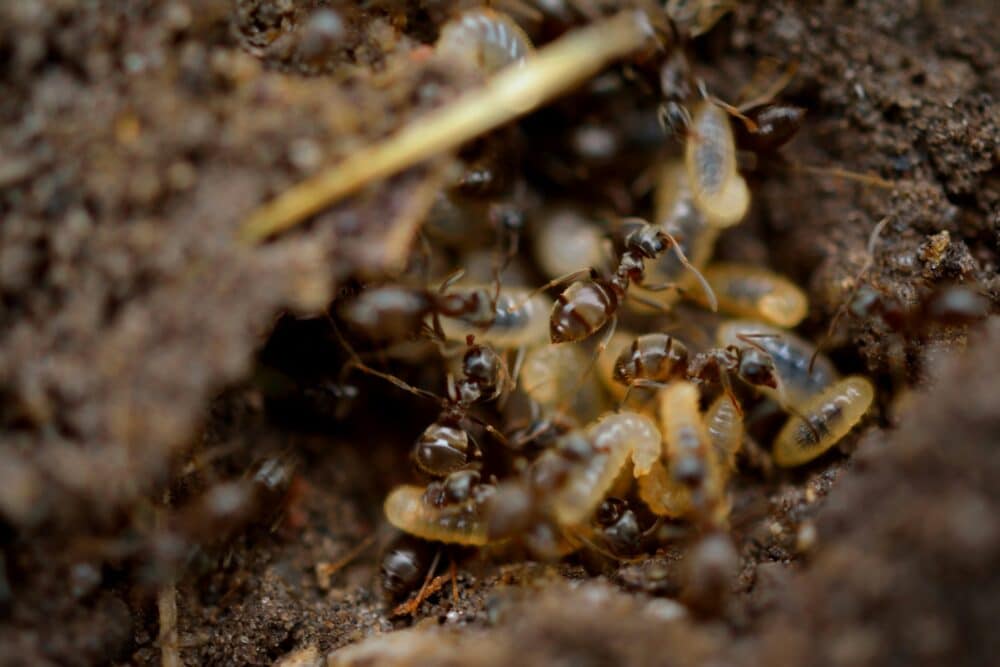
Currently, ant larvae are fed by adults, who bring them pieces of food that are already partially digested. Not all receive the same amount or the same type of food, so those that receive the most nutritious morsels and those who eat more will be raised to become the next queens, for that colony or for another to which they will migrate when they reach adulthood. The other larvae will give rise to more worker ants or to soldiers.
However, previously the larvae sought out and obtained their own food, not depending on the care of adults. But as ants became increasingly specialized in their tasks within colonies, the larvae also lost their autonomy, coming to depend on the food that was brought to them.
By controlling the growth of the larvae, the ants also effectively controlled the future of the nest, especially in terms of its composition, determining which larvae would become workers, which would become soldiers and which would become queens.
“By taking control of larval nutrition, adult ants were able to sculpt a morphology considerably more distinct and specialized between queens and workers, revealing unprecedented levels of social complexity,” explains in a press release, Arthur Matte, co-author of the article published in the journal ‘PNAS’.
The researchers say that this greater control over the roles that the larvae would assume when they became adults allowed the creation of increasingly specialized castes and increased colony size, and led to the loss of the workers’ reproductive capacity, with the task of producing offspring becoming exclusively concentrated in the queens and leaving the workers devoted to their duties. All of this enabled ants to become, the authors say, “ecological powers,” in highly organized and complex societies capable of shaping entire ecosystems.
Therefore, nutritional control of the larvae by the adults was “a critical turning point in the evolution of ants,” the scientists say in a press release, “with profound implications for understanding the dynamics of cooperative insect societies.”
Adria LeBoeuf, the other author of the article, notes that the change in controlling larval development “reflects fundamental transitions in evolution, such as the emergence of multicellular life, in which individual cells lost their autonomy to function as part of a larger organism.”