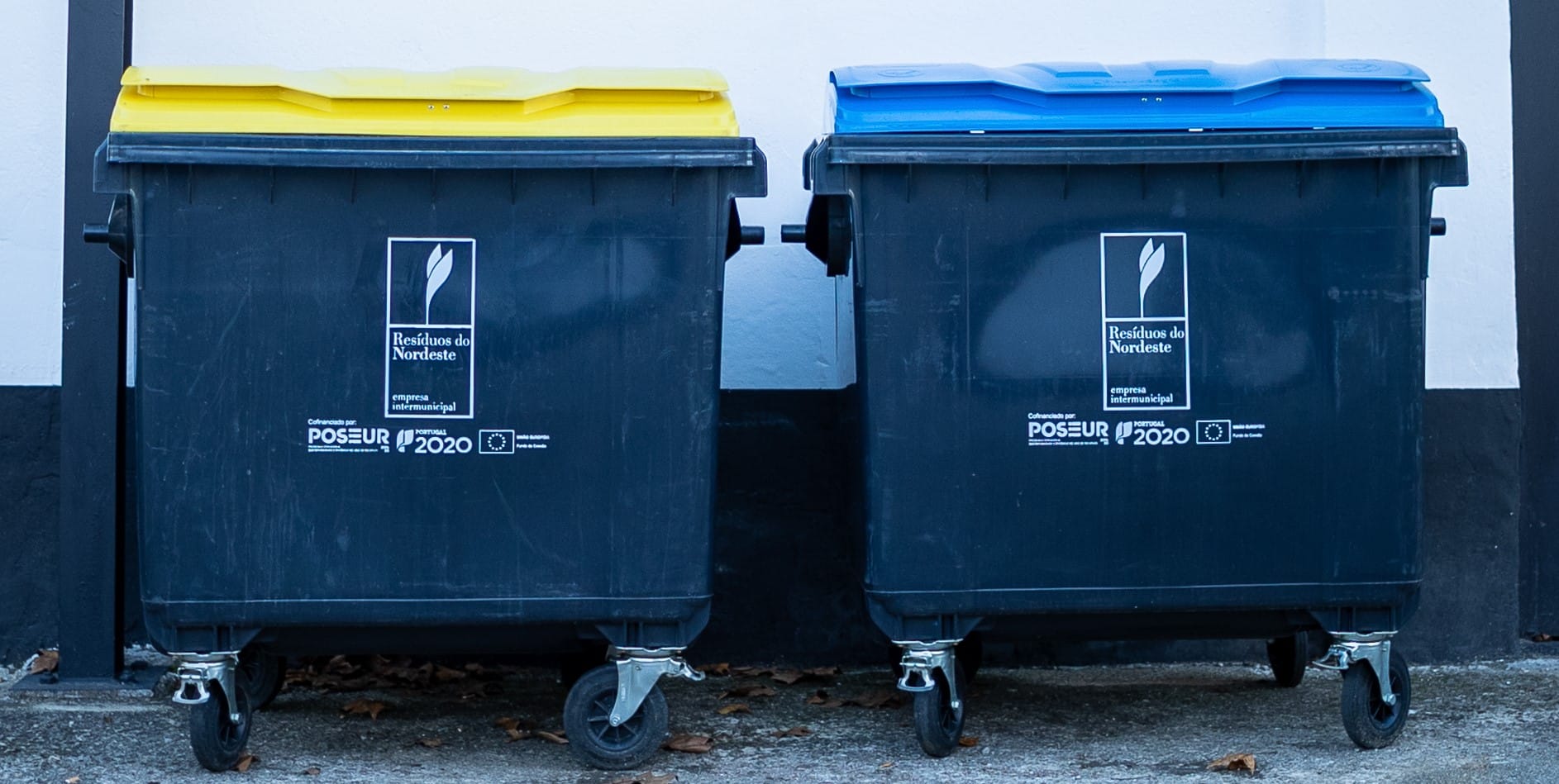
The intermunicipal company Resíduos do Nordeste has a new fleet, presented yesterday, consisting of 25 more environmentally friendly vehicles that enable faster and safer waste collection in Bragança, Vinhais, Vimioso and Miranda do Douro.
According to the president of Resíduos do Nordeste and the mayor of Carrazeda de Ansiães, João Gonçalves, the fleet renewal was part of the terms of reference and represents an investment of around 1.3 million euros, which he considers “relevant” and which will allow for “a better service”.
The vehicles, which will be used to carry out the Cold Land route, i.e., the municipalities of Bragança, Vinhais, Vimioso and Miranda do Douro, were presented today at the Municipal Theater of Bragança.
In statements to Lusa, the general director of the intermunicipal company, Paulo Praça, stressed that the fleet has been completely renewed, with 25 vehicles of various sizes, including street sweepers, electric, gas and last-generation diesel models.
“It was strictly necessary to improve the fleet’s efficiency. It’s not only a matter of being new, a more efficient fleet, suited to the territory, with ecological concerns, less noise, lower consumption, fewer CO2 emissions (carbon dioxide),” Paulo Praça added.
The new vehicles will also allow faster work and access to locations that, until now, with the old trucks, were not possible, such as, for example, the historic area of Bragança, near the castle.
On the other hand, according to Paulo Praça, they provide more comfort and more safety for workers. “With the double-hook system (…) [the collection] becomes safer and quicker to perform, avoids human intervention and is less risky than what was done. We hope to be able to do more and better,” he emphasized.
Regarding the collection of undifferentiated waste and selective waste, the general director told Lusa that, in 2025, there was growth in both types of materials, although there are still no official figures.
This is likely due to the increase in economic activity and seasonal tourism. Paulo Praça explained that separate collection equipment has been installed at event sites; however, this is a problem he describes as European, since Europe has not yet managed to break the cycle of “more economic growth, more waste production”.
“There are missing measures, specifically measures that do not fall within our remit, that are not our responsibility, which are prevention measures. Take the case of textile waste, food waste itself (…) there is a lot of waste in our society and that is not appropriate, and we hope that, in the future, people and policies will define prevention for the waste sector, which is fundamental,” he argued.
Still, he hopes that “with this strengthening of equipment resources and with the citizens’ role, which is decisive,” in 2026 the collection of undifferentiated waste will decrease and the collection of recycled materials will increase.