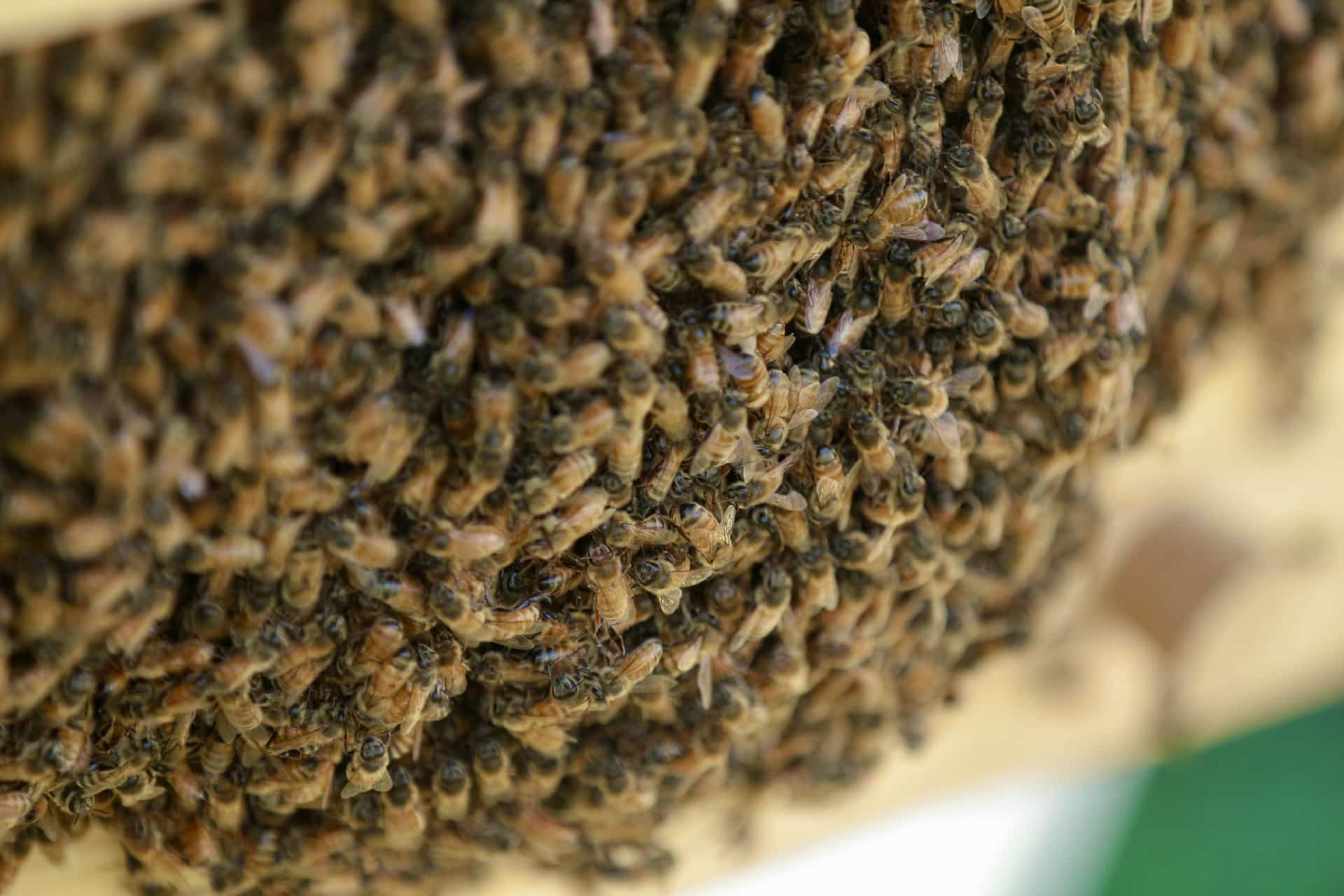
Bee colonies are well-organized organisms, with clearly defined leadership structures. The worker bees are the physical force of the group and often sacrifice themselves for the protection and welfare of the collective.
A new investigation has shown that this altruism is not shared by the queen bee, a monarch more interested in preserving her own life than that of her unborn descendants. The queen is, in fact, the future of the colony, as she is the only fertile individual capable of generating the next generations, so the loss of the monarch can often dictate the end of the colony.
In an article published in the journal ‘Current Biology, researchers, led by the University of California, Davis (United States of America), reveal that when exposed to chronic pesticide contamination, the queen transfers these toxic chemicals to her eggs. Thus, the monarch frees herself from the threat of contamination, sacrificing her offspring.
Dubbed “maternal discharge,” scientists say this behavior shows how far the queen is willing to go to survive.
The authors note that this is the first time something like this has been documented in honey bees (genus Apis) and reveals how pesticide contamination can ultimately lead to cases of large chemical buildup and even colony collapse.
“When pesticides accumulate to the point that the queen’s eggs become so contaminated that they can no longer develop properly, a turning point may occur,” warns Sascha Nicklisch, the article’s lead co-author. And this can ultimately dictate the end of the nest.
Previous studies had already shown that worker bees are the first line of defense of the queens against pollution, by filtering toxic substances from the foods they provide to the monarch. They do so by metabolizing the toxins and depositing the residues in the wax of the honeycombs.
But this study confirms that this protection has limits. “In our study, pesticides begin to accumulate in the queens over time, which suggests that the worker bees’ filtration capacity may become overwhelmed,” explains Angela Encerrado-Manriquez, the first author.
“When this happens, the queens have their own defense. The maternal discharge allows them to transfer the toxic burden to their eggs.”