
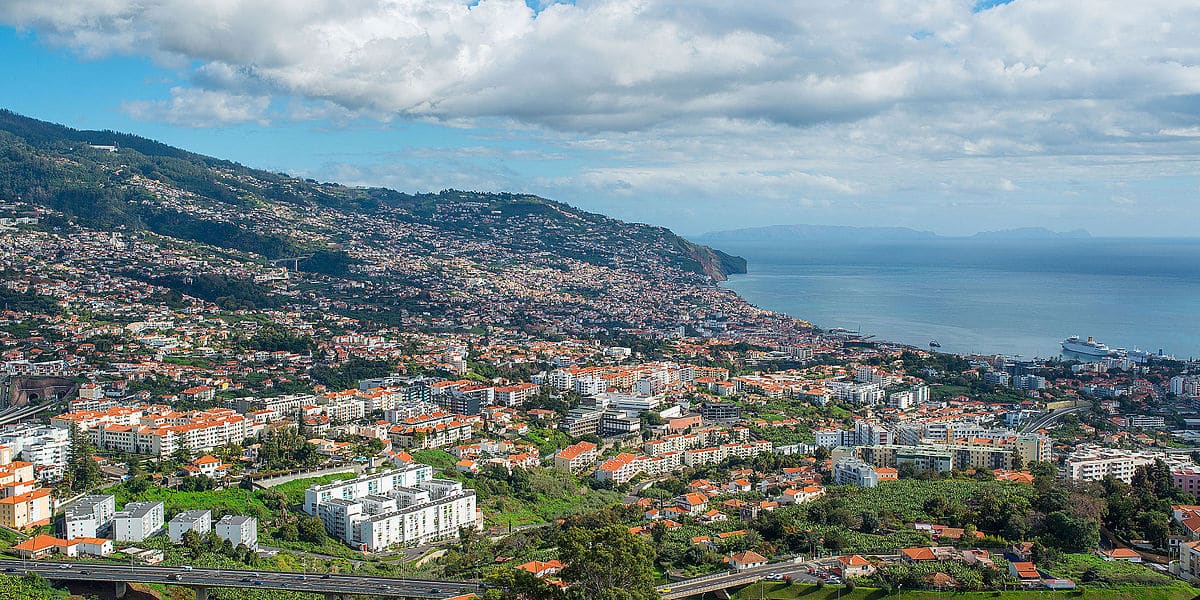
The need to intervene in the green spaces of Madeira’s social housing neighborhoods and the vision of a young biology student came together to give rise to a project that aims to transform gardens into public oases composed of endemic species.
The “Gardens+Ours” project was presented today in Funchal by the public company IHM – Investimentos Habitacionais da Madeira, which identified the need to “intervene in a deeper and more integrated way in the green spaces” and relied on the ambition of Júnio Jardim, who observed that public gardens were predominantly composed of invasive or exotic species.
“It does not make much sense for us to say that we have to address, in forests and other natural spaces, the problem of invasive plants, when we are deliberately planting in green spaces, even if they are urban,” stated the 21-year-old in statements to the Lusa agency.
After making this observation in Bairro da Nazaré, the largest public housing complex in Funchal, and realizing that it was something transversal to most of the public green spaces, Júnio Jardim began to develop the idea and contacted several associations and the IHM.
The idea was welcomed with interest, he noted, and developed in collaboration with the associations, IHM and the Institute of Forests and Nature Conservation (IFCN), which will provide the endemic plants.
The pilot project will take place in a garden in Bairro da Nazaré that had been unlawfully occupied, with makeshift constructions built over the years, and which has been cleared and prepared to begin receiving the new species.
Trees such as Marmulano, Madeira olive tree, juniper and island beech will be planted, as well as other shrub species, among which the coastal maçaroco, geraniums, heathers, cabreiras and rock bust, highlighted Júnio Jardim.
The planting actions, which will bring together the community and the associations, are planned for October 15 and 22.
The chairman of the board of directors of IHM, Leonel Silva, emphasized that the idea is to test the initiative in this space and to widen it to other areas under the responsibility of the public housing company, namely in the neighborhoods of Romeiras and Nogueira.
This project, he stressed, is also developed with awareness-raising contacts with the population and results from listening to the needs identified by the residents.
In the case of this garden, where the project begins, in Bairro da Nazaré, “it created a sense of insecurity among people” and was “very closed,” with structures and improper uses, such as garbage dumps, he said.