
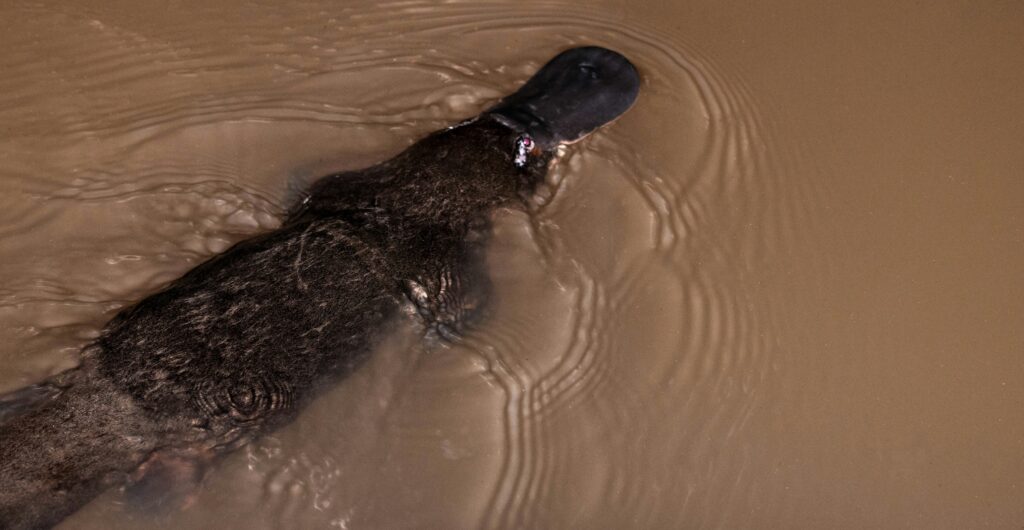
The platypus population in some areas of the Upper Shoalhaven River, in the Australian state of New South Wales, Australia, has increased over the past 20 years, despite a severe drought, according to a study based on data collected over two decades.
The investigation relied on capturing platypuses in the wild, marking them and releasing them back into the natural environment, allowing the monitoring of population changes over different periods.
The researchers concluded that estimating the total number of animals from the number of adult female platypuses captured constitutes a reliable method for calculating the annual platypus population.
The results are particularly relevant because they cover a two-decade period marked by adverse environmental conditions, including a severe drought, suggesting a resilience of this population to changes in habitat conditions.
The study focused on still-water zones or slow-flowing stretches, known as pools, along the Upper Shoalhaven River, an important area for the species.
Long-term data are considered essential for understanding the evolution of platypus populations and assessing their response to extreme phenomena, such as prolonged droughts, in the context of increasing pressure on Australian freshwater ecosystems.