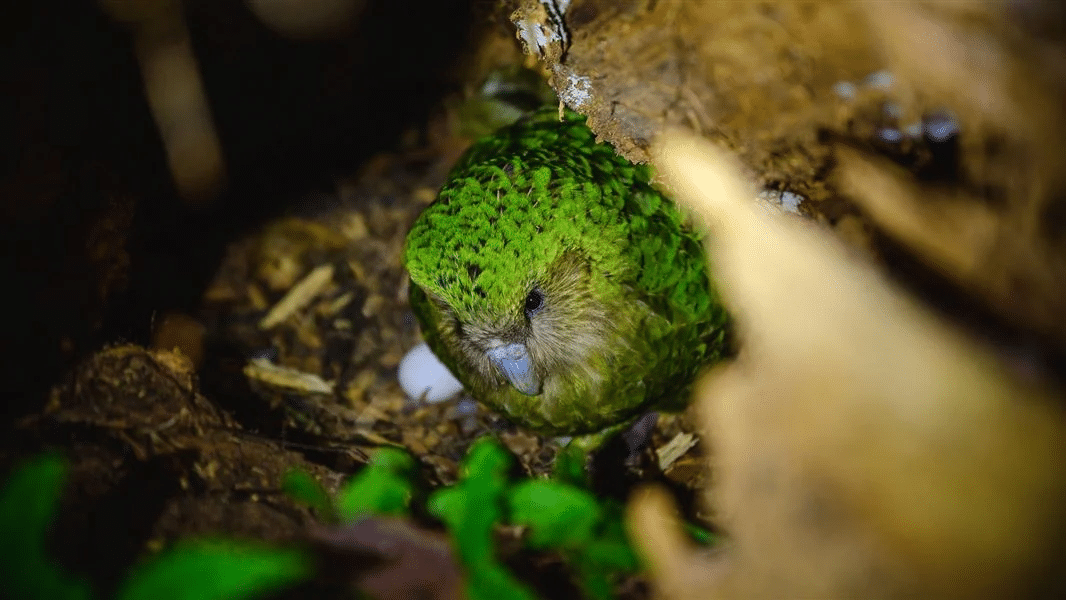
The kakapo (Strigops habroptilus) is a terrestrial bird native to New Zealand, considered the heaviest parrot in the world, and as such is unable to fly.
It is critically endangered, classified as “Critically Endangered” on the IUCN Red List, with an estimated population of just over 200 individuals living in the wild. The species is now increasing, but still far from being out of danger. In the last century, kakapos have seen their population decline by more than 80%, mainly due to predation by cats, mustelids and rats, low reproductive success and disease.
Precisely because they are few, nocturnal and living on three small remote islands off the southern coast of New Zealand, seeing a kakapo in its natural habitat is something most people will never be able to. However, and also to raise global awareness about the importance of conserving an iconic bird at risk of disappearing, the New Zealand government installed a camera in the nest of a kakapo on Whenua Hou Island.
The camera, which streams continuously and broadcasts the images to the world via a YouTube channel, records segments of Rakiura’s life, a 24-year-old female, still comparatively young, as kakapos can live more than 60 years, with some cases of individuals reaching 90.
The live video began in January this year, released by the New Zealand Department of Conservation, with the aim of monitoring the first breeding season recorded since 2022. And all because of an abundance of rimu tree fruits, native to that Oceanian country, which are the bird’s main food. Kakapo reproduction coincides with the large abundance of rimu fruits, so both phenomena occur only every two or four years, which makes the recovery of the population of these birds slow and very challenging.
In the nest being filmed, dug into the soil among the roots of a tree, the adult female Rakiura laid two eggs that gave rise to two chicks, one born on February 24, designated code Vori-A1-2026, and the other born on March 2, named Nora-A2-2026. However, conservationists decided to transfer the chick Vori to another female, who will serve as an “adoptive mother,” so that Rakiura can focus on the other chick and thus increase the chances of success for the little bird.
The New Zealand Department of Conservation says that the kakapo is “one of the most distinctive species” in the country, and that the live video serves so that everyone in the world can see a kakapo in the wild and also to help scientists learn more about the species’ reproductive behaviours.
“The more people who care, the better the kakapo’s future,” says the agency.
Since it began at the start of the year, more than 100,000 people have already watched the broadcast, and it is estimated that the number of viewers will never be below a hundred.