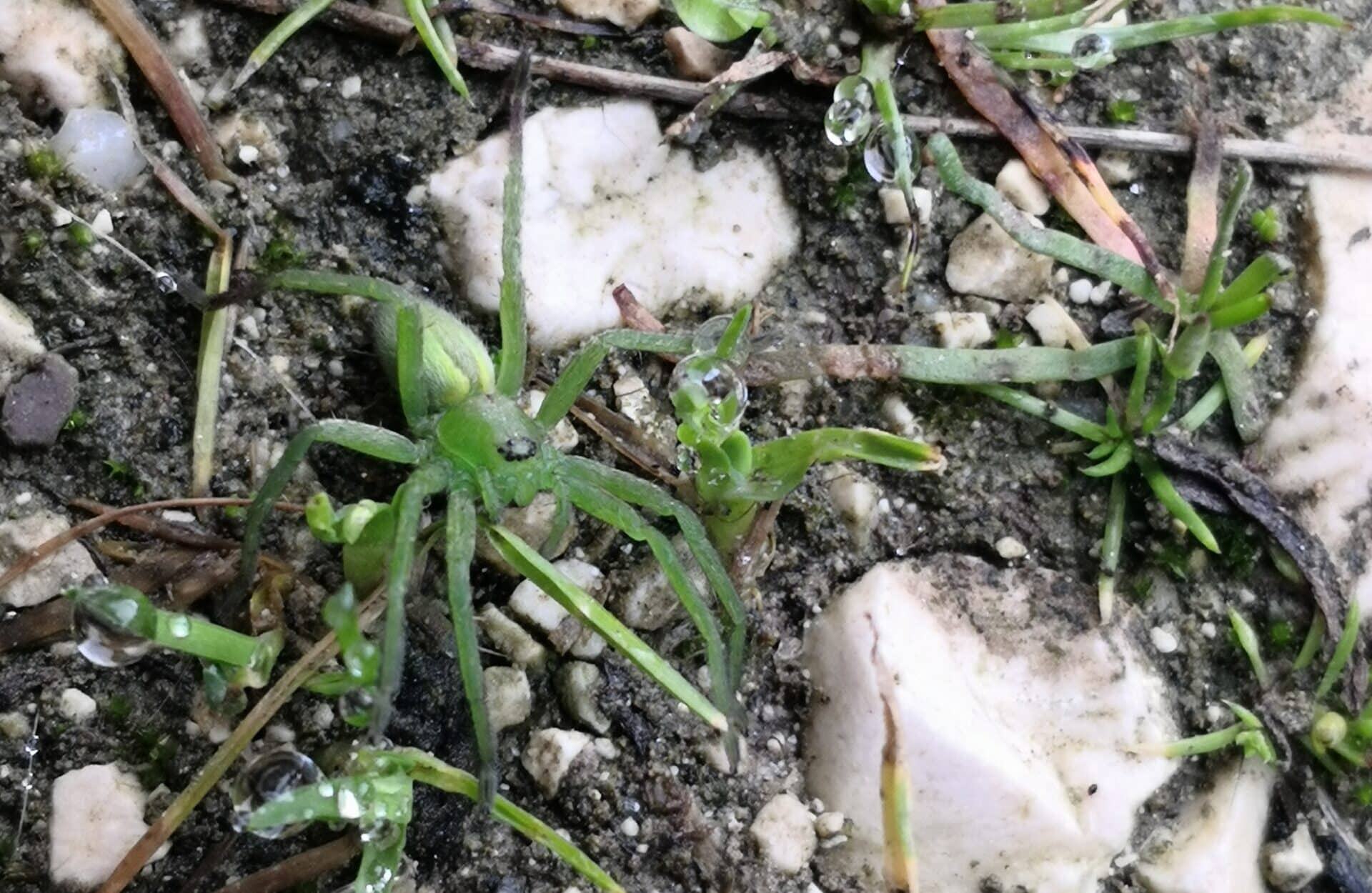
Although they are seen with fear and even revulsion by many, insects and arachnids are fundamental elements of ecosystems, pollinating plants, controlling populations that can become pests, and recycling nutrients.
However, several obstacles prevent these small crawlers from being adequately protected from human actions and their effects on the planet. A study from the University of Massachusetts Amherst, recently published in the journal PNAS, reveals that in the United States of America (USA) 88.5% of the insect and arachnid species occurring in that country have no conservation status due to a lack of data. In other words, it is not known whether they are in decline or thriving, nor what the main threats they currently face are.
“We simply don’t know how they are faring,” laments Laura Figueroa, coauthor. “Almost nothing is known about the conservation needs of most insects and arachnids in North America,” she says.
Figueroa and Wes Walsh, the study’s first author, wanted to understand the state of these arthropods in the U.S., but when they rolled up their sleeves and began the work, they encountered profound gaps in scientific knowledge. Therefore, with this study they aim to draw attention to what they describe as “an urgent need” to assess, protect, and value insects and arachnids, which are fundamental for the proper functioning of ecosystems and also for human societies.
“They contribute to pollination and biological pest control, serve as indicators of air and water quality, and have even penetrated deeply into many cultures around the world,” the researcher notes.
However, unlike “charismatic and popular animals,” such as lions or pandas, insects and arachnids “do not typically receive the same attention,” says Figueroa.
This investigation was based on the analysis of conservation assessments for 99,312 known North American species of insects and arachnids, excluding Mexico.
From this examination, the team concludes that the little data that exist tend to prioritize aquatic species that are considered important for monitoring water quality, such as mayflies, stoneflies, and caddisflies. Furthermore, it is noted that more charismatic groups of insects, such as butterflies and dragonflies, receive a “disproportionate share” of protections aimed at conservation within the arthropod world.
“Arachnids, in particular, are truly absent from conservation efforts,” laments Walsh. “We need more data and more protection for insects, but also for arachnids.”
For the researcher, these two groups of animals are “more than objects of fear,” and he argues that “we must appreciate them for their ecological importance, and that starts with gathering more data and considering that it is worth conserving them.”
The pair of researchers also say that, in the United States, states that depend more on extractive industries, such as mining and fossil fuel exploration, are less likely to protect spiders and insects, as that clashes with their economic interests. “Most North American states do not protect a single species of arachnid,” Walsh notes.