Year after year, we watch either new extreme natural phenomena for which there is, at least, no very recent memory, or the intensification of phenomena with which, for better or worse, we are already familiar.
Scientists say that such phenomena can be explained, at least in part, by the worsening warming of the Earth’s planet and the associated environmental changes, such as the warming of the Atlantic.
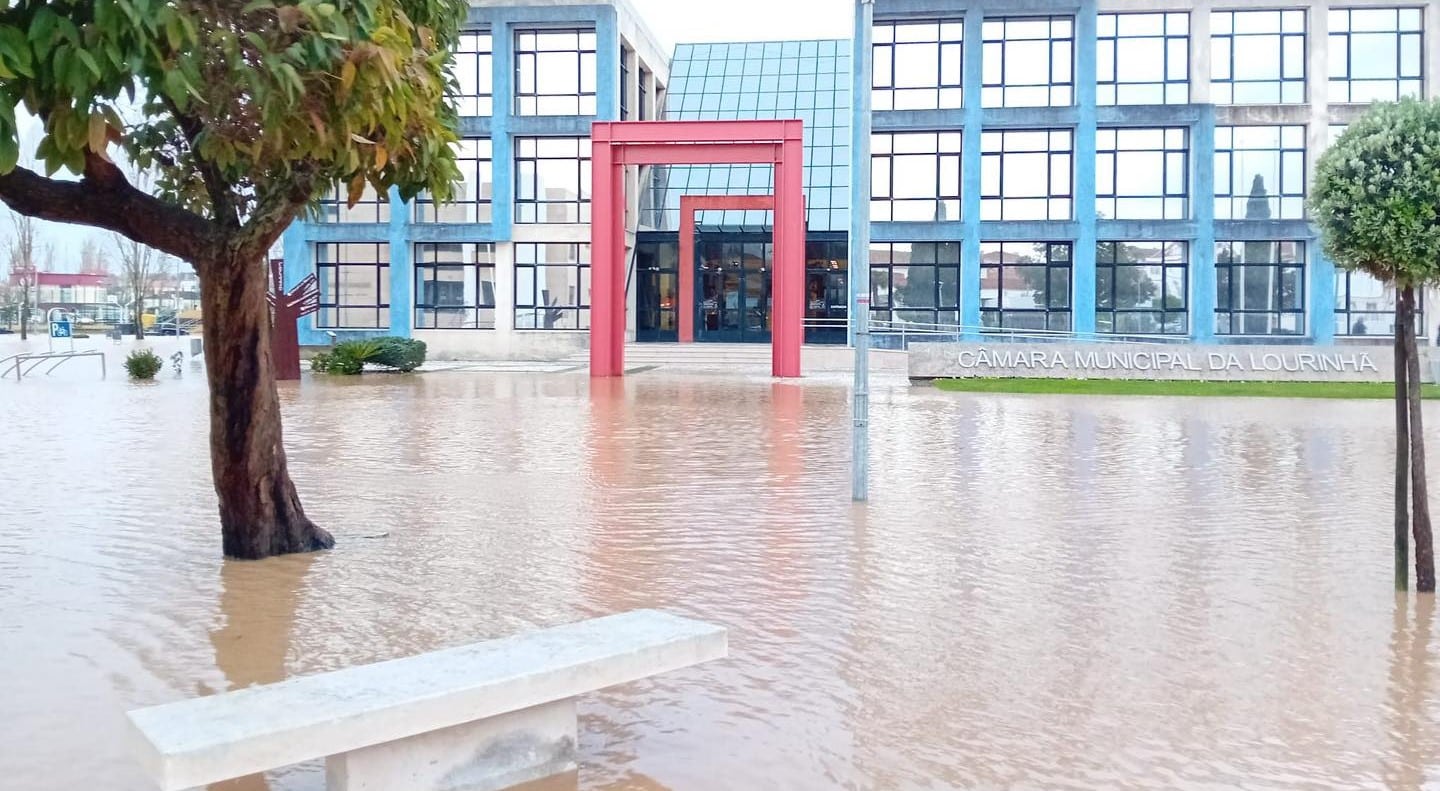
For more than two weeks, Portugal has been battered by successive storms, and especially since January 28, when Storm Kristin struck the country, we began to realize that we are little or not prepared at all for this kind of intense phenomena.
In the public space, however, there seems to be some misalignment regarding the reasons for the consequences of the weather events.
On one hand, meteorology and climate specialists say that forecast models are becoming increasingly accurate and that warnings were issued in time. On the other hand, the Government says there was no way to predict and prepare for the storms, and NGOs also criticizing governmental bodies for not acting properly.
In a joint interview with Green Savers, Jorge Rafael Raposo, director of the Master’s in Civil Protection, and Artur Costa, director of the Department of Civil Protection, both from Lusófona University, help us understand whether the country is really prepared for what lies ahead.
After all, what happened? Was it a lack of warnings, an incapacity to act, or are these truly new extreme phenomena for which there was no possible preparation?
It is clear that we are going through very adverse weather conditions and that phenomena like Storm Kristin have no parallel in our recent history. But it is also undeniable that several things failed, and the issue of warnings and alerts is only one of them.
There were missing comprehensible warnings for our population and, apparently, also for our politicians and the rescue structure itself, which seems not to have understood what was being prepared.
As you say, there is a lot of information available and it is necessary to make use of it. Today it is possible to forecast and IPMA warned of the possibly “catastrophic” effects of Storm Kristin. But before that, prevention, planning and preparation of responses are the keystone. What was seen, however, is that prevention did not exist, anticipation was insufficient and the response was insufficient, disorganized and late. The warning to the populations, a matter of utmost importance, failed utterly at the most critical moment.
Are meteorological warnings, by themselves, sufficient without a long-term territorial prevention strategy?
Clearly meteorological warnings are not sufficient! To deal with circumstances like those experienced, it is necessary to produce clear messages and use broad means that reach everyone, if necessary going door to door or using loudspeakers. And that is not something meteorology does.
It is also necessary to be pedagogical and persistent. It is essential to develop long-term communication and education strategies that prevent risk and deepen a culture of collective safety that engages everyone.
Portugal lacks a true risk culture, but also the risk communication culture, which has to be improved and continually evaluated.
Does the way the Portuguese territory is organized allow a proper response to phenomena such as extreme winds, heavy rains, sudden floods or strong maritime agitation?
The Portuguese territory is disorganized and there is no denying it. The fault is not the lack of legislation, but the lack of enforcement and control; not only punitive enforcement is needed, there is a need to meet with the populations and explain the reasons why industries must be in industrial zones, reasons why we cannot continue to have derelict houses in the middle of villages and towns, next to infrastructures we cannot allow vegetation to accumulate.
All this is also very much the fault of political power and I’m going to put my finger on the wound: local power must assume its duties and not fear electoral consequences.
The central power also must have competent people who can analyze and act to promote greater cohesion and organization of the country. As we have heard, there is a need to end the “quintas.” Also in terms of organizing the civil protection system, the system must be reorganized, because it is clear that it is not responding properly. There is much to change, we must have effective response capacity, coordinating is not commanding and there must be no doubts about those positions. We have forces without their necessary command and for many years requested. And coordination is not working when civil protection, instead of requesting a force at the level of the requirements, asks 4 people and a van from the armed forces at the moment of a catastrophe.
As the director of a study cycle in Civil Protection, I clearly state, we cannot have people in civil protection with no training related to the field; it must be mandatory that they have studied or provenly worked in the area.
We also cannot have politicians completely unprepared for the dimension of the responsibilities they have. I ask what happens to a person who invested in their training in civil protection, who studied, learned to use new tools, techniques and then sees places in their area being occupied by others. It is like having trained F-16 pilots and then going to fetch a weekend driver in your car to pilot the plane.
In what way has construction in floodplains, coastal zones or slopes contributed to worsening the effects of storms?
It is unacceptable to build in areas as mentioned. It is like allowing people to drive under the influence of alcohol or drugs and pretending nothing bad will happen.
Nature has its spaces of domain and in those human technology is unable to override; therefore there are zones that are not for construction. Once again political powers must take their role and be firm.
Are cities in Portugal being planned with regard to the excess impermeable soil and the rising flood risk?
No, not at all. We continue to see mass construction in cities, with no care for soil or flood risk, and preferably near rivers, along the banks, because it is always an area of greater landscape beauty.
What decisions taken in the past in territorial planning help explain the damages that are repeated today?
It must be acknowledged that it’s not my specialty. But the problem of territorial asymmetries and the coastalization of the country and the depopulation of the interior repeats.
There are policies lacking and there is no support to live in interior and abandoned rural areas, but often safer and proven excellent residential areas. We continue to encourage living in the large urban poles, saturated to the extreme in terms of construction and services and often built where they cannot.
Have territorial planning instruments effectively incorporated climate risk? Knowing that the vast majority of mainland municipalities supposedly already have climate adaptation plans.
It is true that the vast majority of municipalities already have climate adaptation plans, but that does not guarantee they are truly used, as they are not properly operationalized nor integrated into municipal policies.
But I warn these plans do not have legal force, they can recommend measures, but do not compel their implementation. Therefore the Municipal Master Plan (PDM) remains the heart of planning and we must incorporate climate risk into it.
In what way could better territorial planning help to avoid many of the damages recorded in the most recent episodes of storms, such as fallen trees, power outages and the isolation of communities?
A more effective territorial planning would have greatly reduced the damages of the latest storms by avoiding exposing people and infrastructure, ensuring a proper and well-maintained arboriculture, locating power lines and other critical assets in safe locations and forms, creating redundancy in accesses to prevent the isolation of communities.
A territory thus thought is more resilient and suffers less from extreme events. And now we speak of the present situation, but note this is equally valid for summer fires and for a multitude of other risk situations. Forest planning and, generally, planning of all rural space, are other facets of the same problem where effective prevention and adaptation policies are lacking and where territorial planning is decisive.
What role can territorial planning play to reduce the constant dependence on emergency responses?
Territorial planning, by nature, is the management instrument that puts things in the right places, including the risk variable. It is the unifying instrument that can contribute to greater territorial resilience and, if not eliminate, at least to lessen the consequences of phenomena like those we lived through and facilitate future recovery from damages.
Territorial planning is one of the essential instruments for implementing prevention policies that can decisively reduce the constant dependence on emergency aid in cases of serious accidents or catastrophes.
Preventing instead of reacting is the path to prevent the emergency response from becoming routine because a well-thought territory resists better.
What changes should be made in territorial planning policies in light of the increase in extreme weather phenomena?
Changes in territorial planning policies are necessary and require a deep shift to accompany the increase in extreme weather phenomena, moving from a reactive logic to a preventive logic.
This, as I said, involves making mandatory the integration of climate risk in the PDM (and others), with updated flood, erosion, fire, wind maps, and preventing construction in vulnerable zones. It is important to pay close attention and reinforce critical physical assets, ensuring that power lines, roads, health facilities and civil protection are located and sized for extreme events.
Nevertheless, what events also tell us is that the sizing criteria for many structures (buildings, factories, dykes, etc.) must be revised or their application requires greater oversight. Because what was seen is that many of these structures collapsed and were not prepared to resist the force of the storm. In short, policies must evolve to protect the territory and what grows on it.
Is the country learning from past extreme episodes or does it continue to respond case by case?
In my opinion, we continue to respond case by case. We had wildfires and the response is a commission, we had the blackout and nothing changes, and thus we continue unfortunately without answers that go beyond reports and commissions. We need actions.
To what extent is the population prepared to deal with extreme phenomena?
It is not!
Is more information and awareness needed, such as drills, school-level actions, for example?
Yes, the population needs a lot of support, but not theatre drills that add nothing. It cannot be only the ground trembles; we must have effective training. In schools, citizenship disciplines should be used; we must have differentiated and appealing activities that lead school communities to be truly involved and, by extension, the families of other age groups will be sensitized and informed.
In other words, it is really necessary to take seriously the challenges of risk inherent in contemporary society and do everything to prepare the country and its population to live with them in a more capable way. Effectively implementing in our schools the Risk Education Framework approved ten years ago and always postponed, as well as deepening an effective culture of safety in Portuguese society are goals that must be pursued constantly, in the name of a better future for our children.