The book Eucalyptus – History, Territory and Knowledge was released on the occasion of the International Day of Forests, celebrated on March 21. The work offers a comprehensive and scientifically rigorous view of Portugal’s forest heritage and was born from the desire to bring technical-scientific knowledge closer to people.
In an interview with Green Savers, Maria José Roxo, from the Scientific Council of the Eucalyptus Forum and co-author of the book, explains that diversity “is a resilience factor, since different plants respond in different ways to heat, drought and fire.”
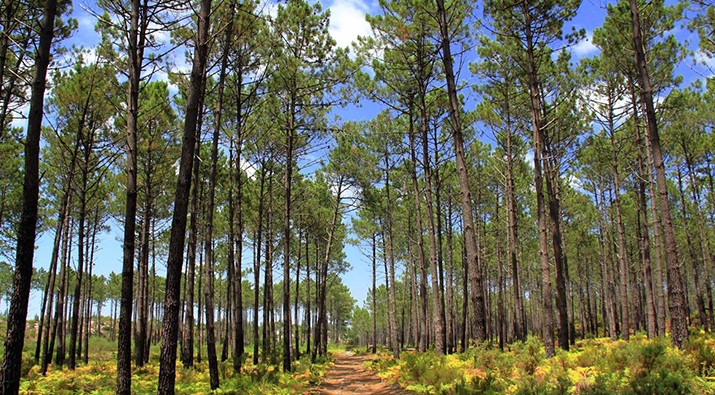
For the chair of the Faculty of Social Sciences and Humanities at NOVA University Lisbon, the creation of forest mosaics — combining plantations, conservation areas with native species and agricultural zones — is essential. “It avoids continuous extensions of the same species, increases habitat diversity and contributes to healthier soils, with greater water retention capacity, thus reducing the severity of fires,” she says.
According to the researcher, diversified and well-managed landscapes “facilitate firefighting and promote greater stability of ecosystems in the face of extreme weather events associated with climate change.”
Prevention and active management: the best defense
In the fight against fires, the professor highlights the need for strategic action: “this implies effective investment in land use planning, forest planning and in active and continuous management. Specific prevention measures, such as the creation of firebreaks, protective strips and the control of shrub vegetation, are essential.”
In addition, she emphasizes that it is fundamental to combat rural abandonment, stressing that “it is crucial to restore landowners’ interest in the management of their forested areas, promoting vigilance and early detection, among other measures.”
Despite advances, challenges persist in linking science and practice: “the extreme fragmentation of forest ownership hinders the dissemination of best practices and the implementation of technological innovations. It is necessary to deepen the sociological understanding of the motivations of forestry producers to promote real change,” she warns.
Maria José Roxo also stresses that there is, however, a “very relevant gap in the link between science and political decision-making.” Therefore, she adds, “it is fundamental that society understands that the forest is a common good, something to safeguard and regenerate.”
Far beyond fires
Teresa Soares David, also on the Scientific Council of the Eucalyptus Forum and co-author of the book, reinforces that the forest debate must look beyond fire. “Focusing the forest debate on the issue of fires is a reductive view that obscures the numerous benefits that the forest provides,” she tells us in an interview.
Sustainably managed forests offer essential services, the researcher explains: “they sequester carbon, promote water infiltration into the soil, reduce the risk of small and medium floods, protect the soil against erosion and provide spaces for recreation.”

According to Teresa, these areas are also fundamental for the circular and low-carbon bioeconomy, and for a constructive discussion on fire prevention. “The excessive focus on fires hinders a constructive discussion about the need for active forest management, which is, paradoxically, the best tool for preventing fires themselves,” she explains.
Eucalyptus: myth vs scientific evidence
The eucalyptus species, the subject of controversy, is clarified by scientific evidence. “Studies show that there is no correlation between the growth of eucalyptus area and the increase in the total burnt area. The species, by itself, is not determinative for fire risk; the key lies in the existence or not of active management,” she reveals.
Relatively to resource use, the researcher adds that eucalyptus “displays high water-use efficiency.” In addition, she continues, the more productive plantations “play an important role in carbon storage and in mitigating climate change.”
The impacts on biodiversity and water consumption, Teresa warns, arise more from intensive silvicultural systems than from the intrinsic characteristics of the species.
Climate change and adaptation
Climate change demands solutions to increase ecosystem resilience: “the forecast of changes in precipitation patterns and the increasing frequency of extreme events require solutions that promote resistance and resilience of ecosystems,” says Teresa Soares David.
Among the strategies, the development of drought-tolerant and pest-resistant clones stands out, as well as the identification of new areas for planting and the adaptation of silvicultural methods to new climatic realities, supported by reliable meteorological models.
Edited by The Navigator Company, the book results from the multidisciplinary work developed within the Eucalyptus Forum, which brought together dozens of specialists and synthesized technical and scientific knowledge in a structured and independent way over 18 months. The work is organized into chapters dedicated to essential themes such as biodiversity, water and soils, forest management, fire risk, sustainability and the bioeconomy, always using clear language designed for the non-specialist reader.