The governments of Portugal and Spain signed, in Huelva, an agreement to guarantee the safety of navigation and recreational boating on the international stretch of the Minho River.
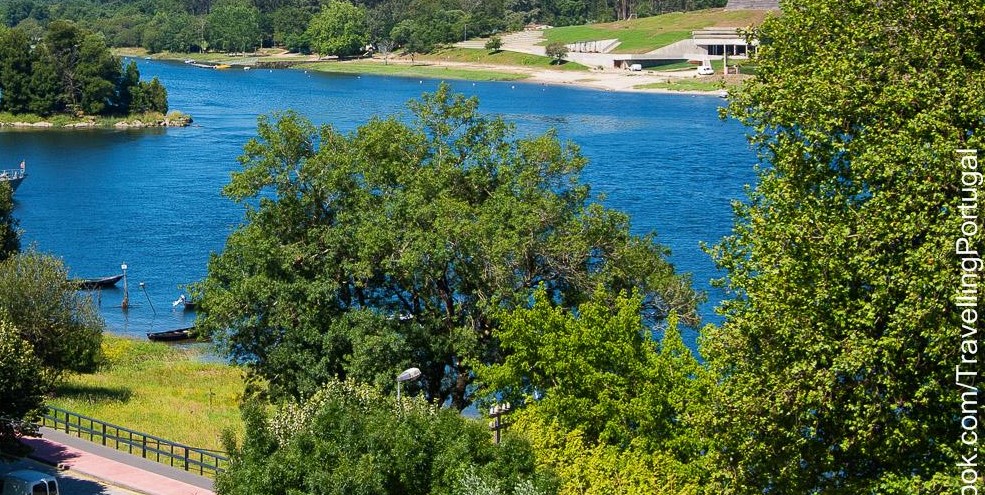
The international river, a natural border between the two countries, rises at an altitude of 750 meters in the Serra de Meira, in the Autonomous Community of Galicia, and runs about 340 kilometers to discharge into the Atlantic Ocean, south of the town of A Guarda and north of Caminha.
The agreement signed today during the 36th Iberian Summit, held in Huelva, states “the need to adopt common measures and join efforts with a view to an appropriate regulation of recreational boating on the International Stretch of the Minho River (TIRM), taking into account the need to promote and adopt, within the scope of navigation safety, common measures that enhance the practice of safe navigation.”
The two neighboring countries say they are “aware of the need to promote a common, equitable and reasonable use of the waters of the international stretch, taking into account the particular characteristics of the Minho River and the principle of free movement,” in light of “the gradual increase in recreational boating that has been observed on the TIRM.”
The agreement, with 36 articles, “applies to all vessels, including recreational ones, regardless of nationality, classification and activity, jet skis and other floating or beach devices or contraptions, as well as to their users,” and determines that “all people aboard a personal watercraft must wear approved life jackets.”
In Article 14, it emphasizes that, “in order to protect inland waters and ensure people’s safety, motor navigation upstream of the confluence with the Mouro River is prohibited,” upstream of the municipality of Monção, in the district of Viana do Castelo.
“For safety reasons it is prohibited to navigate from the mouth of the Trancoso River [an international river that originates at Portelinha [Castro Laboreiro and flows into the Minho River] to the international bridge between the municipality of Arbo and the place of Peso [Melgaço] in rapids zones or where there are natural or artificial obstacles, with the exception of vessels specifically designed to practice rafting or white-water kayaking, duly licensed fishing support vessels and for carrying out activities or competitions expressly authorized by the competent authority of each country,” reads the document.
The article dedicated to environmental protection prohibits “the use of two-stroke engines upstream of the confluence with the Caselas River [a tributary of the Minho River located in the province of Pontevedra, Galicia], since they pose a risk of degradation to the quality of inland waters and the environment.”
Relating to high-speed craft (HSC), when navigating the TIRM, “they are obliged to comply with the internal law of the part where they are registered, in addition to what is established in the present agreement.”
“Competent authorities exchange information about the HSC of the respective nationalities that are in the TIRM, as well as those that are detected. To ensure the safeguarding of safety and river traffic on the TIRM, the competent authorities may adopt the following additional measures, duly substantiated and communicated to the owner in accordance with applicable law,” the agreement says.
The agreement provides to “deny the authorization to depart, based on the circumstances of local navigation, the order should, where possible, specify the date and time at which such authorization may be granted, establish an authorized itinerary for the transit of HSC on the TIRM, establish the maximum speed limits, which may vary according to the zones of the TIRM, and prohibit the navigation of HSC that have undergone modifications not authorized by the flag State.”
The 36th Luso-Spanish Summit, which took place after months of large fires and storms on the Iberian Peninsula, was dedicated to the impacts of climate change in Portugal and Spain and had as its theme “an alliance for climate security.”