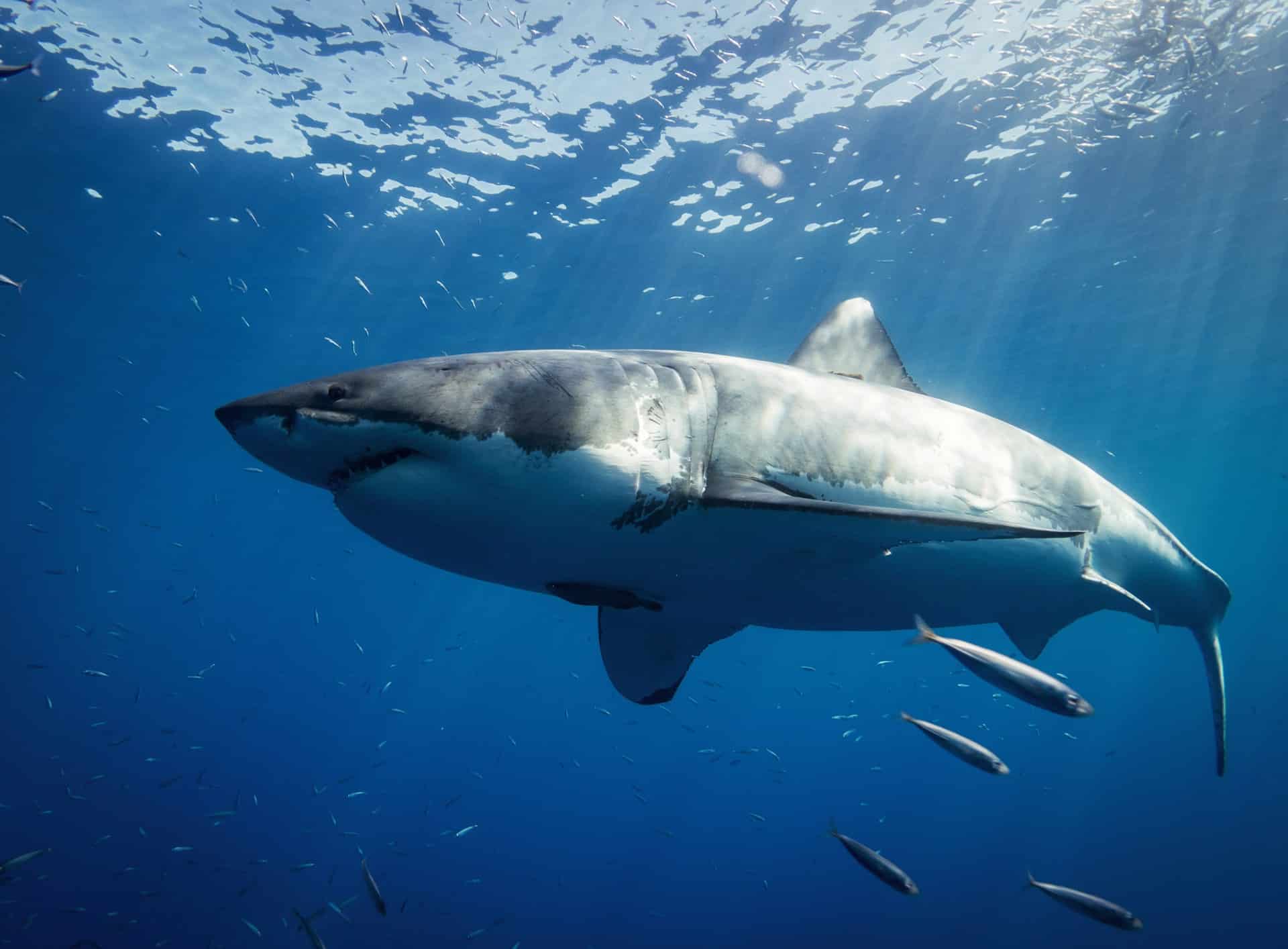
On April 20, 2023, a great white shark (Carcharodon carcharias) was accidentally caught by fishermen off the southeastern coast of Spain, in the Mediterranean Sea.
Measuring about 2.10 meters and weighing between 80 and 90 kilograms, it was classified as a juvenile.
The species is globally classified as “Vulnerable” to extinction on the IUCN Red List, but in Europe and the Mediterranean the situation is more dire, being classified as “Critically Endangered” with a declining population trend.
Finding a great white shark in the Mediterranean is therefore not something that happens frequently, so a group of researchers took advantage of this incident to delve deeply into the records of great white shark sightings between 1862 and 2023 in the region.
In a paper published in the journal ‘Acta Ichthyologica et Piscatoria’, scientists from the Spanish Institute of Oceanography, the University of Cadiz, and the University Institute of Maritime Research say that the 2023 observation and the data collected over about 160 years point to the “continued but sporadic” presence of great white sharks in the Spanish Mediterranean waters.
José Carlos Báez, the study’s first author, states that finding juveniles is especially important, as it will allow us to know whether the species is reproducing in the region.
The sightings of great white sharks in the Mediterranean are rare, so their presence is mostly detected indirectly, for example through bite marks found on common turtles (Caretta caretta) found by fishermen, or through documentation of observations and encounters in the press.
The researchers also say that the presence of great white sharks in the Mediterranean may be influenced by the seasonal migration of the Atlantic bluefin tuna (Thunnus thynnus), which spawn in these warmer marine waters. This is because there appears to be a coincidence between the documentation of shark occurrences and the migration of the tunas, so they write that “this correlation supports the hypothesis that prey availability influences the movements of great white sharks.”
The scientists emphasize that, given its threatened status, it is essential to continue monitoring this shark species, one of the most infamous top predators of all, in the Mediterranean Sea. Only in this way, they warn, is it possible to devise effective protection and recovery strategies for this “iconic top predator.”