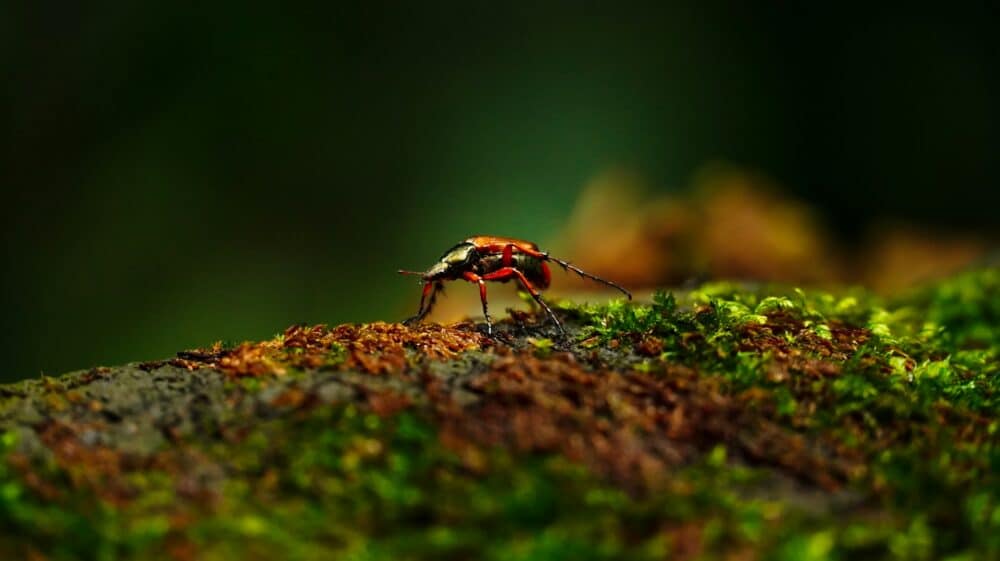
The rising temperature of the planet, especially in tropical regions, is pushing to the limit the ability of insects to cope with heat. As the Earth warms, these animals strive to adjust to the new conditions, but not all of them succeed.
A study led by the University of Würzburg (Germany), and published this month in the journal Nature, reveals that tropical insects living in higher-elevation habitats, such as mountains or plateaus, are able to cope better with temperature increases, at least in the short term and perhaps not as quickly as would be necessary. By contrast, many species living in lower-altitude areas cannot do so.
The work involved studying the thermal limits of more than 2,000 insect species, with data collected between 2022 and 2023 in East Africa and South America, from cool montane forests to humid and hot tropical forests and savannas.
The team also conducted genome analyses of several species to try to understand why some can tolerate heat better than others, finding that these differences relate to the structure and thermal stability of proteins. In other words, the authors say that heat tolerance is deeply rooted in the biology of insects, and thus cannot be altered beyond a very narrow limit.
Therefore, the researchers signing the article say that tropical insects have only a limited capacity to adapt to the effects of climate change, hence “the rising temperatures may have a massive impact on insect populations”, especially in tropical regions, “with the world’s greatest biodiversity”, according to Marcell Peters, the lead co-author of the study.
And the scenario may be even more worrying, because insects are fundamental elements of the ecosystems they are part of, such as pollinators of plants, as predators of pests, as decomposers of organic matter. “Since insects play central roles in ecosystems,” Peters warns, “there is a threat of broader consequences for entire ecosystems.”
As for the Amazon, one of the Earth’s regions with the greatest diversity of life forms, the researchers say that “the prognosis is particularly worrying”.
If the planet continues to warm unabated, they warn, the future temperature increases could push half of the Amazon’s insects to the limit of their thermal tolerance.
Around 70% of all animal species currently known are insects, and most of them live in the tropics, so the impacts of warming could be devastating for Earth’s biodiversity and for the functioning and resilience of ecosystems.