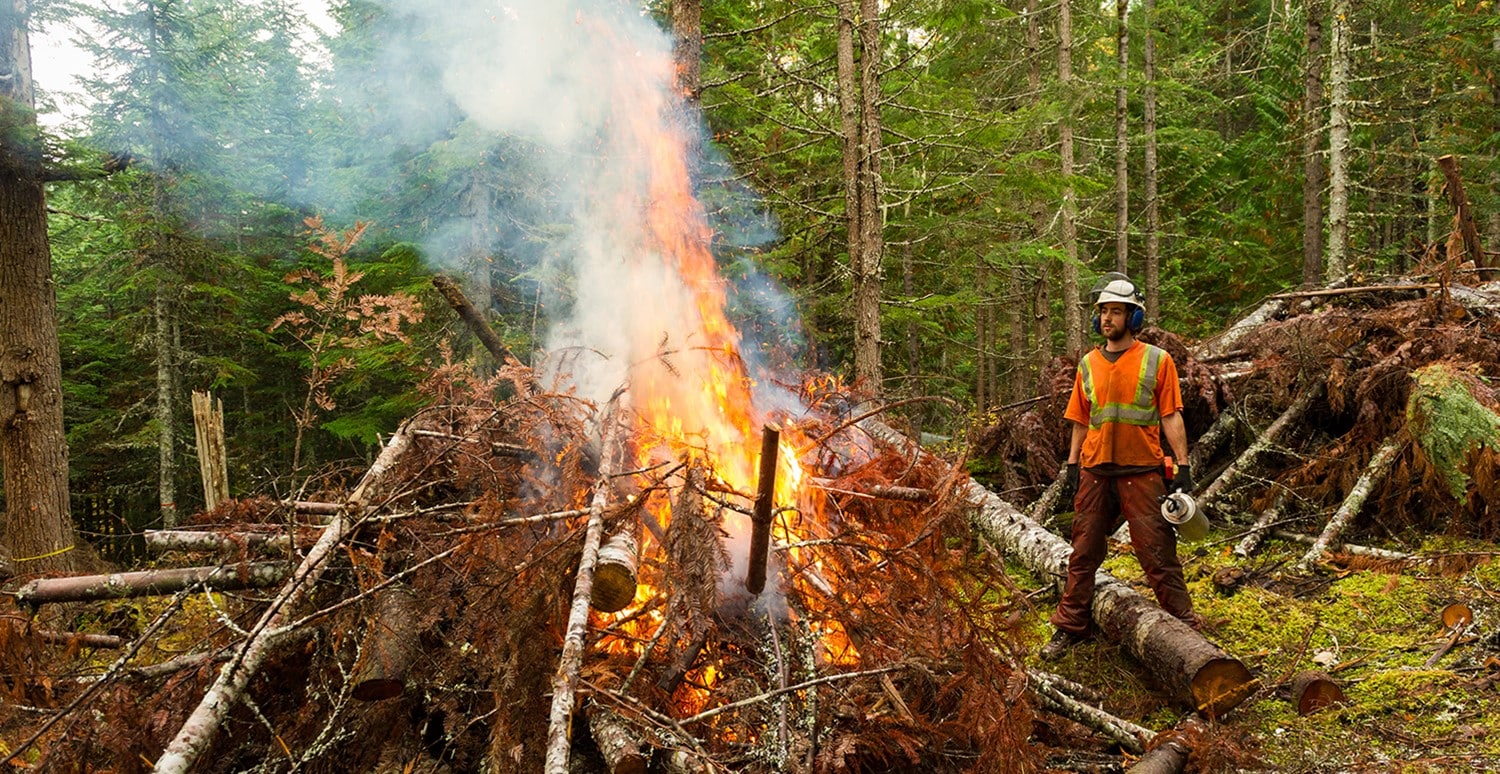
The Institute for Nature Conservation and Forests (ICNF) is carrying out controlled-burn actions for fire prevention and pasture renewal, having intervened about 800 hectares in the Northern region during the 2025/26 campaign.
“This is a controlled-fire action with a double objective: creation of grazing pasture for cattle and also serves as a mosaic to reduce fuel load in the landscape and to act as an opportunity zone for fighting if a fire occurs in the summer,” said ICNF technician Artur Borges.
The official, who spoke to the Lusa agency during a controlled-burn operation in Serra do Marão, in the municipality of Amarante, also pointed to the training of the operatives.
“Training is always inherent to fire actions, because winter controlled fire is the best training for summer firefighting,” he said.
Campaigns take place annually between September/October and April, but the weather conditions observed this winter, with a lot of rain and wind, made carrying out controlled burning difficult.
This week conditions were favorable, so actions took place across the region, from Ponte de Lima, Melgaço, Montalegre, Bragança, Ribeira de Pena, Vinhais to Arouca or Vale de Cambra.
“We have everyone on the ground these days giving their best, from morning to night,” said Miguel Gonçalves, Deputy Regional Director of ICNF Norte.
The official said that, to date, more than 800 hectares have been burned in the region, about 400 hectares in the Marão and Montemuro ranges, and he noted that the teams also include, among others, firefighters, staff from municipal technical offices of the town halls, or servicemen from the Emergency Unit for Protection and Rescue (UEPS) of the GNR.
Miguel Gonçalves highlighted that these actions are complementary to other initiatives aimed at preventing and mitigating fires, adding that since 2020, in the North, more than 8,000 hectares of a primary network of fuel-management strips have been installed.
On the day Lusa accompanied the team led by Artur Borges, three plots were carried out simultaneously in Serra do Marão.
“We have about three days without rain, relative humidity around 40%, 30%, with some wind, but it’s a dry wind, and therefore we have the ignition and fire-conduction conditions within safety,” he explained.
There is always a risk involved, so the operation was monitored by members of the ICNF’s National Corps of Forestry Agents (CNAF) and forest firefighters from the baldios.
“The means are sized according to the size of the parcel and the weather that will be on the day of burning,” explained Artur Borges.
This is the so-called good fire. “The fire we carry out is a fire that is conducted under conditions beneficial to the territory,” he stressed, adding that it creates “a buffer zone” that can provide an effective opportunity to combat a wildfire.
Planning the areas to intervene in mountainous zones is also done with the involvement of the shepherds.
“It is a territory that still has livestock and, therefore, we want to keep people on the land,” said Artur Borges.
And for the Maronesa cow producer José Teixeira, pasture renewal represents “the difference between being open or being closed.”
His farm is located in Canadelo, Amarante, in the Porto district, and, as he explained, his 20 adult cows roam the hills in search of food and, therefore, he considered it “essential that the pastures be renewed and that there are burns every year.”
“They [the cows] are autonomous, eating, drinking, and I have no expense with them. Only like this can one be productive at the end of the year, because otherwise, if I were feeding them here daily, it would be impossible,” he said.
Artur Borges highlighted the “proximity work” with the shepherds “to see what they need, where they need it and to combine this with the territory-defence strategy and its management.”
The closure of the burning season, between the end of March and mid-April, depends on the hydrological year, but is also related to factors linked to the reproduction of species and the environmental values to preserve.
In Marão, part of the Natura 2000 Network, these are concerns that must be taken into account.