The rapid loss of sea ice and the acidification of the oceans due to climate change are altering the growth and nutritional value of microscopic algae. These algae are an essential food source for fish, krill, and other small organisms that support larger animals such as whales, seals, and penguins.
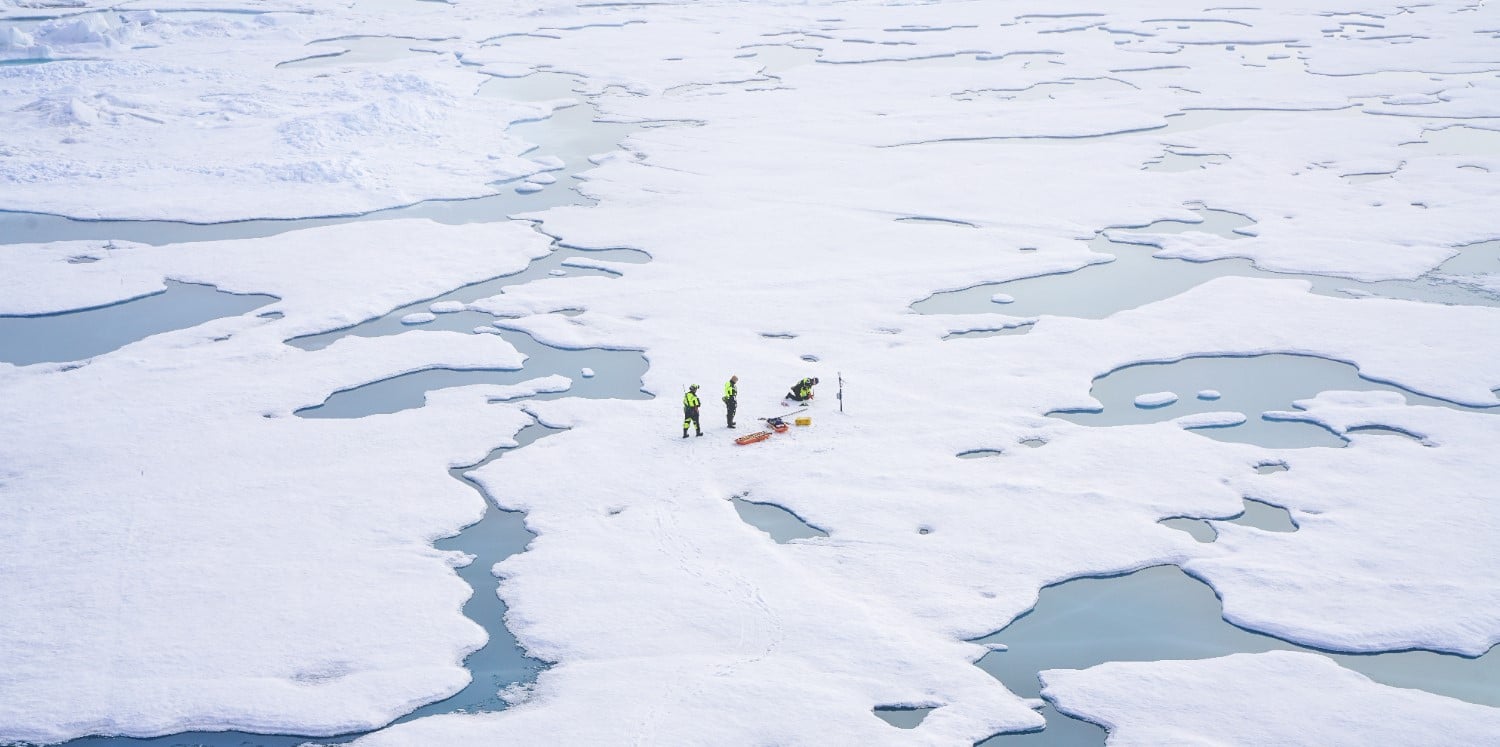
Sea ice is a vital habitat for microalgae, but the thickness and coverage of sea ice have declined significantly. In Antarctica, records have hit historic lows in the last four years, and researchers predict that by 2050 the Arctic Ocean could be ice-free in the summer.
“One-tenth of the global oceans are frozen, including the Arctic, the Antarctic, and the Southern Ocean, which are undergoing rapid change. These fragile ecosystems depend on microscopic algae as the base of their food webs,” says Rebecca Duncan, polar marine ecologist.
“These tiny algae provide essential nutrients – such as fats, proteins, and carbohydrates – to creatures ranging from krill to fish, polar bears and whales. However, the nutritional value of these algae depends on their species and how they respond to environmental changes,” she adds.
Duncan’s investigation reveals that ocean acidification, ocean temperatures, and the amount of light beneath the ice affect the composition of microalgae. Increased light and rising water temperatures raise the fat content in common species, but there is a critical threshold at which they stop accumulating fats and essential proteins, altering the nutritional quality for marine animals.
“Krill and other zooplankton rely on microalgae as a food source at certain times of the year to reproduce. If the zooplankton do not reproduce, the food chain is disrupted, threatening fish populations and, in turn, seals and other large animals,” she explains.
“If we still have some sea ice, but it is melting faster, then it is not a hospitable environment for microalgae because there is too much light and the ice is melting very quickly from below, which can disrupt their life cycle,” she emphasizes.
“If we lose sea ice completely, the microalgae that depend on sea ice will have nowhere to live. Could this ecosystem function without sea-ice algae? Will there be something else to fill the void? We do not know the answer to this question,” she adds.
Duncan has published five papers based on her doctoral research, the most recent, “Seasonal environmental transitions and metabolic plasticity in a sea-ice alga from an individual cell perspective,” published in Scientific Reports.
Her current research project aims to compare microalgae in land-fast sea ice with microalgae in drifting pack ice. Land-fast ice is disappearing at a faster rate, so these microalgal populations are under greater stress.
Rebecca Duncan has spent the last eight years conducting fieldwork in polar regions, examining the variable composition of sea-ice microalgae. She earned her PhD from the University of Technology Sydney (UTS) with UNIS Svalbard in 2024.
Her doctoral thesis was recently awarded the Gold Medal for Thesis by the Australian Institute of Nuclear Science and Engineering. She is also a passionate advocate for women in field research and science and has just been named “Superstar of STEM” by Science and Technology Australia.