Debates and awareness-raising actions about waste and the importance of reuse will take place this month across the country, within the framework of the initiative “March, the Month of Bulk and Reuse,” which began yesterday.
This year, in its fourth edition, the campaign is promoted by the Liga-Ação Platform, a project of the non-governmental organization “Zero Waste Lab,” with partnership and support from other entities.
In a statement, citing data from the Portuguese Environment Agency (APA), the organization recalls that the Portuguese produce 42 kilograms of waste per month, about 500 kilograms per year, and that nearly one-fifth of the food available to consumers was wasted worldwide in 2022, according to the UN.
It is in this context that the campaign “March, the Month of Bulk and Reuse” takes place, 31 days to promote bulk consumption and reuse “as concrete responses to food waste and the climate crisis,” bringing together consumers, retailers, associations and local projects.
The campaign aims to demonstrate that prevention begins in daily choices, emphasizes the “Zero Waste Lab” in the statement.
“It is not enough to manage waste better; we must produce less of it. Bulk buying allows purchasing only what is necessary and preventing food waste. Reuse reduces disposable packaging. These are simple individual decisions with a real climate impact,” says, quoted in the statement, Sara Morais Pinto, cofounder of the “Zero Waste Lab” and coordinator of the Liga-Ação.
This year the United Nations (UN) dedicates the International Day of Zero Waste, on March 30, to food waste. The United Nations highlights that around one billion tonnes of food are wasted annually, contributing up to 10% of global greenhouse gas emissions, and stresses the importance of sustainable patterns of consumption and production.
The UN, on its webpage about the international day (proclaimed in 2022), asks governments, businesses and individuals – including civil society, academia, communities, women and youth – to participate in zero-waste initiatives.
Zero Waste Lab notes that since 2024, EU member states must ensure the separate collection of biowaste, but also says that since collection is necessary, prevention “is more effective.”
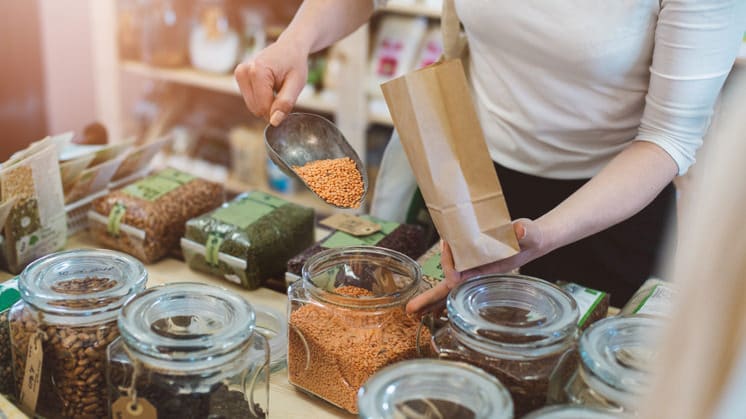
Bulk consumption, the organization notes, enables the purchase of smaller quantities of food and other goods (such as personal care products and detergents), avoiding single-use packaging and promoting the reuse of containers. A approach that, it says, “contributes to extending the life cycle of products, to strengthening local trade and to reducing the environmental footprint associated with consumption.”
Zero Waste Lab was founded in 2017 and has as its objective to promote zero waste.