In a breakthrough that pushes humanity closer than ever to clean, virtually limitless energy, Canadian researchers have achieved something long considered impossible: generating 600 million neutrons per second in a controlled fusion experiment.
This result doesn’t just break a world record — it signals a major turning point in the global race to make fusion energy safe, stable and commercially viable.
Why this record matters more than any fusion milestone before
For decades, scientists around the world have tried to recreate the process that powers the Sun: fusion. But achieving high neutron output — safely, repeatedly, and without uncontrolled reactions — has been one of the field’s biggest obstacles.
Canada’s new experiment changes that.
The team managed to trigger a reaction so efficient that experts are calling it the most promising step toward real-world fusion reactors.
A senior physicist involved in the project summarized the moment simply:
“This isn’t just a record. It’s proof that controlled fusion can become a practical, everyday energy source sooner than anyone expected.”
What exactly does “600 million neutrons per second” mean for the future?
Neutrons are the key measurable output of a fusion reaction. The higher the neutron count, the more energy the system is producing — and the closer we are to a functioning, energy-positive reactor.
What makes this achievement extraordinary is not just the quantity of neutrons, but how stable the reaction remained while producing them.
Here is the one list experts use to explain why this is such a breakthrough:
- record-level neutron output, exceptional control over reaction stability, reduced risk of runaway reactions, and improved energy capture efficiency
In other words, fusion is no longer a theoretical dream — it’s becoming an engineering challenge with increasingly clear solutions.
The technology behind Canada’s fusion leap
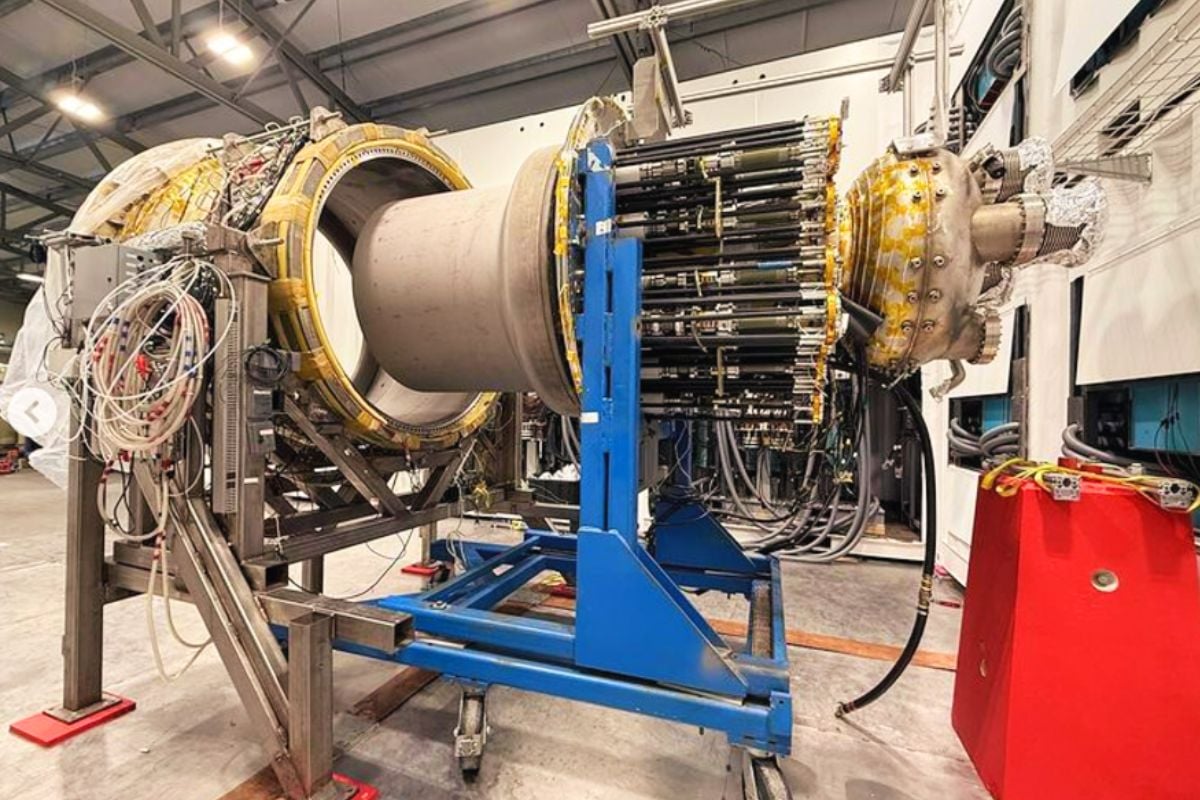
Instead of copying the massive, expensive reactor designs used in other countries, the Canadian team relied on a compact fusion setup that uses precisely shaped magnetic fields to trap superheated plasma.
By fine-tuning the confinement system, they extended the reaction time and increased neutron production far beyond previous limits.
What truly stunned observers is that the apparatus used was smaller, safer, and dramatically cheaper than the enormous tokamaks dominating the field today.
If this approach scales successfully, fusion could become accessible to dozens of countries — not just superpowers with billion-dollar budgets.
Why scientists say this may accelerate fusion by decades
For years, the biggest criticism of fusion research has been that results always seem to be “30 years away.”
But experts now say that Canada’s neutron breakthrough, combined with rapid advancements in superconducting magnets and AI-optimized plasma control, could bring functional reactors into testing far earlier than predicted.
One fusion researcher reacted bluntly:
“This changes the timeline. Completely.”
The high neutron output proves the physics are achievable. The stability proves engineering can catch up. And the compact design proves fusion no longer requires megaprojects spanning continents.
A safer path to the clean-energy future
While fission reactors rely on splitting atoms — creating radioactive waste and meltdown risks — fusion cannot run out of control, does not produce long-lived waste, and uses fuel extracted from water.
With a reliable neutron output like this, engineers can finally begin designing next-generation reactors capable of powering entire cities without pollution or carbon emissions.
As climate pressure intensifies, countries are watching this Canadian breakthrough closely.
If fusion becomes practical, it could reshape geopolitics, energy markets, and the daily lives of billions.
The dawn of a new energy era?
The world has pursued fusion for nearly a century. Every step forward felt small — until now.
This record-breaking pulse of 600 million neutrons per second suggests that humanity may be standing at the threshold of a new technological era.
Clean energy. Infinite fuel. Zero emissions. Minimal waste.
What once sounded like science fiction now feels incredibly close.
And when historians look back, they may remember this moment in Canada as the instant when the dream of fusion stopped being a promise — and started becoming reality.