Although they have not yet finished secondary school, 148 Australian students are already collaborating on an international mission aimed at improving bushfire prevention. Integrated into Edith Cowan University’s (ECU) IGNIS internship program, the students in grades 8 to 11 work with NASA scientists, aerospace technology specialists, university researchers and Indigenous fire wardens.
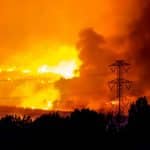
The initiative focuses on lightning-induced fires, which pose a significant threat in Western Australia. Every year, electrical discharges are the source of hundreds of bushfires in the region, many of which start in remote areas and can go undetected for several days.
One of the students’ tasks is to build small weather stations at schools, designed to collect environmental data such as temperature, humidity and soil moisture. This information helps identify conditions that favour the appearance of lightning-caused fires.
The work includes developing technology capable of detecting electrical discharges and providing earlier alerts to firefighting teams. The aim is to improve the forecasting of risk situations and give emergency services more time to respond.
“IGNIS uses space technology to tackle one of Australia’s most pressing challenges,” says Paulo de Souza, Vice-Chancellor for Research at ECU and head of the mission, in a press release. The researcher adds that this work could provide “essential information about fire forecasting and community safety,” as well as research data for scientists and fire investigators worldwide.
The collaboration involves ECU, NASA and several Australian universities, with Edith Cowan University being the only Western Australian university to participate. In addition to the technical work, the program includes mentoring sessions and on-campus activities, allowing students to contact researchers directly and to experience the academic environment.
“IGNIS aims to empower students to use creative thinking, develop solutions to real-world problems and see themselves as part of something bigger,” Paulo de Souza said. “They are not only exploring the fields of science, technology, engineering and mathematics. They are shaping their future.”
The program ends on November 30, with a ceremony in which participants will receive certificates and NASA-associated recognition. The initiative thus seeks to bring young people closer to scientific research and involve them in seeking answers to concrete problems, such as bushfire prevention.