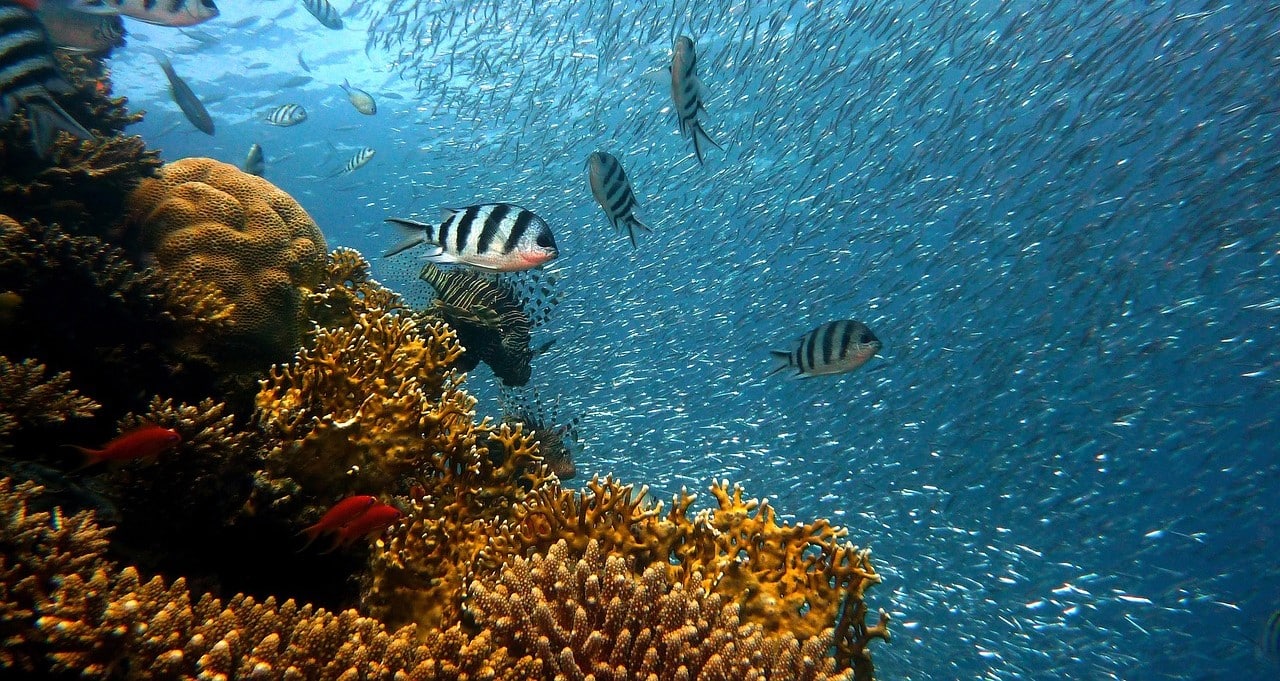
A team of international researchers from James Cook University in North Queensland discovered that the link between fish and corals may not be as strong as scientists have long assumed.
The lead author, Pooventhran Muruga, a PhD candidate at JCU, examined more than 4,600 reports on the relationship between fish and corals.
“It is undeniable that coral reefs are a fundamental habitat for reef fish, providing them shelter and food. Consequently, it is not surprising that, for more than four decades, there has been a general consensus that reef fish are associated with reef-building corals,” said Muruga.
But, in a deeper analysis of the literature, we found that there is a large variability within and among fish and locations and that, globally, the associations between fish and corals are weak.
Professor David Bellwood, co-author of the study, stated that the results question the assumptions about the strength and ubiquity of the associations between fish and corals.
“I would warn against the assumption of a direct and ubiquitous relationship between the two,” said Professor Bellwood.
The co-author Alexandre Siqueira noted that the apparent weakness of the associations between fish and corals, combined with the stability of some fish populations amid the catastrophic loss of corals, underscores the need to recognize that coral cover, by itself, may not influence fish as strongly as we thought.
According to Muruga, rather than a critical interdependence, fish and corals may be two entities that coexist in a much more complex ecosystem.
“The results do not minimize the importance of corals on reefs, but suggest that the relationship is more complex,” said Muruga.
“It underscores the need to look beyond the simple paradigm that more coral equals more fish and to recognize the complex processes that structure and sustain coral reef communities,” he concluded.