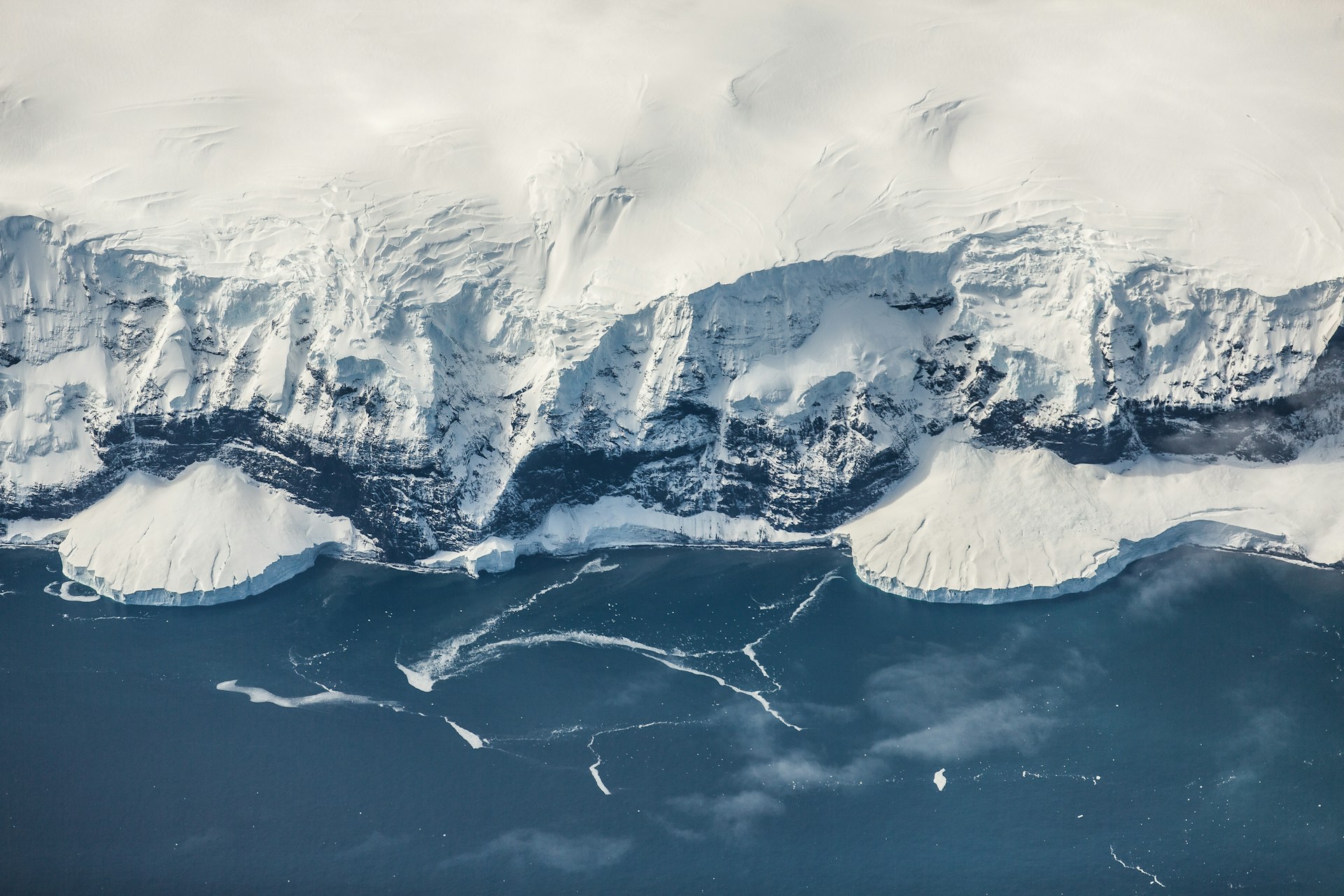
The winters in the Ross Sea, Antarctica, are becoming increasingly stormy, affecting sea ice formation.
A group of researchers from the University of Otago in New Zealand analyzed data from 1964 to 2024 on air pressure and temperature in that icy region to study storm behavior.
In an article published in the journal Geophysical Research Letters, they reveal that, over these six decades, storms in the Ross Sea have become more frequent and more intense, and also more variable. The authors say they have identified a succession of winters with strong storms interspersed with years “unusually calm.”
The team says that, for example, in the strongly stormy winters of 2019, 2022 and 2024, the sea ice that is anchored to the coast or to an ice shelf (as opposed to that which drifts freely on the sea) took much longer to form because the storms continued to lash and break the ice as it was forming.
Therefore, in the spring and early summer, this anchored sea ice was much thinner than in the past, because it forms later and in less time.
The authors of this study also emphasize that the scientific work in this region of Antarctica becomes more complicated and dangerous due to the effects of storms on sea-ice formation.
“It is in the spring and early summer that we carry out field operations. Therefore, the ice on which we operate is thinner than it would have been without the storms,” says Antonia Radlwimmer, the lead author.
Furthermore, she points out that there are data that may not be collected and dynamics that may not be known because the stronger winter storms prevent field outings, forcing them to be postponed.
“This means that our observations do not capture much of the really interesting processes that occur in the depths of winter,” says the researcher.