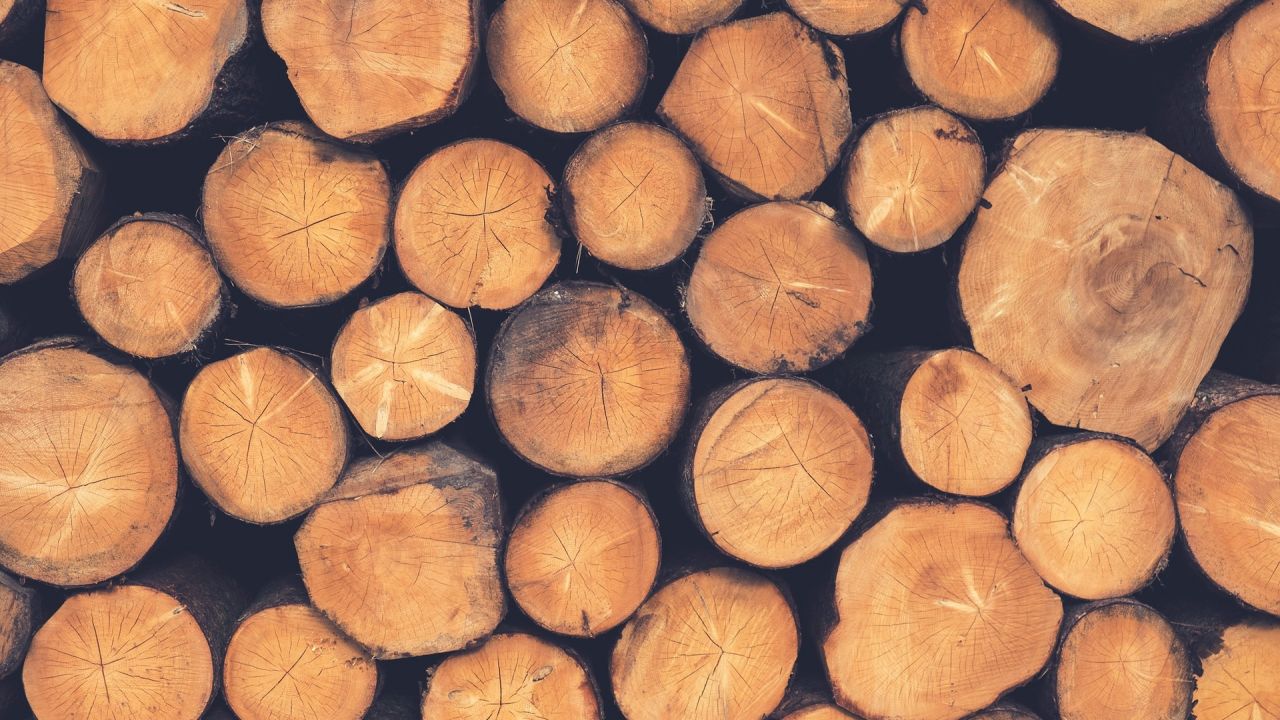
The Angolan government has placed for sale nearly 17,500 cubic meters of Mussivi wood, held since 2018 in two forestry depots due to illegal logging, announced today by the Ministry of Agriculture and Forests.
In a statement to which Lusa had access, the ministry stressed that in 2024 a ministerial order was issued establishing the need for the temporary suspension of the export of the species “Guibourtia Coleosperma”, better known as Mussivi, as a measure for the protection, conservation and sustainable use of the wood.
The same source notes the existence of Mussivi timber held in port facilities, warehouses and private deposits, generating substantial expenses payable to customs authorities for the long periods that containers remain in port facilities.
According to the statement, the country has an average of eight industries that produce school materials and a growing demand from educational establishments, which justifies “the manufacture of tabletops, chairs, desks, doors, windows, flooring, frames, wardrobes, beds, dressers and so many other high-quality utilitarian furnishings for social use”.
Regarding the matter, the national Director of Forests, Domingos Veloso, said that the approximately 17,500 cubic meters of Mussivi wood are concentrated at the Maria Teresa depots, which has the largest concentration of this product, with about 16,000 cubic meters, and at the Caxito depot, with about 1,000 cubic meters.
“We are here to extend an invitation to national furniture industries, to schools of arts and crafts, to carpentries, to the prison services of the Ministry of the Interior, to all these institutions, wood processing units, to go to the mentioned forest product depots; we have a lot of seized wood, wood held at these locations,” said Domingos Veloso, in statements to Angola Public Television.
The official stressed that the wood, “of high quality”, is organized into commercial lots, and “can be used to make high-end furnishings, but can also be used to manufacture school-use furniture”.
“We want to sell this wood as quickly as possible, since it has been held for a long time, since 2018, we have wood from 2019, 2020 up to more recent wood from the years 2024 and 2025,” he stressed.
The national Director of Forests noted that despite the suspension, the logging activity “continued to occur clandestinely”, considering that enforcement “is one of the main Achilles’ heels of the forestry sector”.
“We have a large country, with 1,247,000 square kilometers, but we have fewer than 300 inspectors to cover the national territory, we would need at least two to three thousand inspectors to cover the entire national territory,” he said.
“We are talking about 300 inspectors deprived of almost everything, mobility means, communication means; we have inspectors who have already reached retirement age, only last year did we have an opening to hold a public contest, which allowed us to recruit about 80 technicians, but for the needs we have they are practically not enough,” he added.
Although enforcement activities occasionally rely on the support of the National Police and the Angolan Armed Forces, the official stressed that “it is an area that deserves all the attention” for the protection of forest products.
Mussivi wood, explained Domingos Veloso, is a native species, slow-growing, which can take at least 80 to 100 years to reach maturity; currently there are some trials being conducted by the Armed Forces’ Social Security Institute for its production in nurseries in Bié Province.
Paralleling this, authorities have developed other projects in the central plateau provinces, using the same species, which is mainly found in the southeast of the country and in some regions of the center.