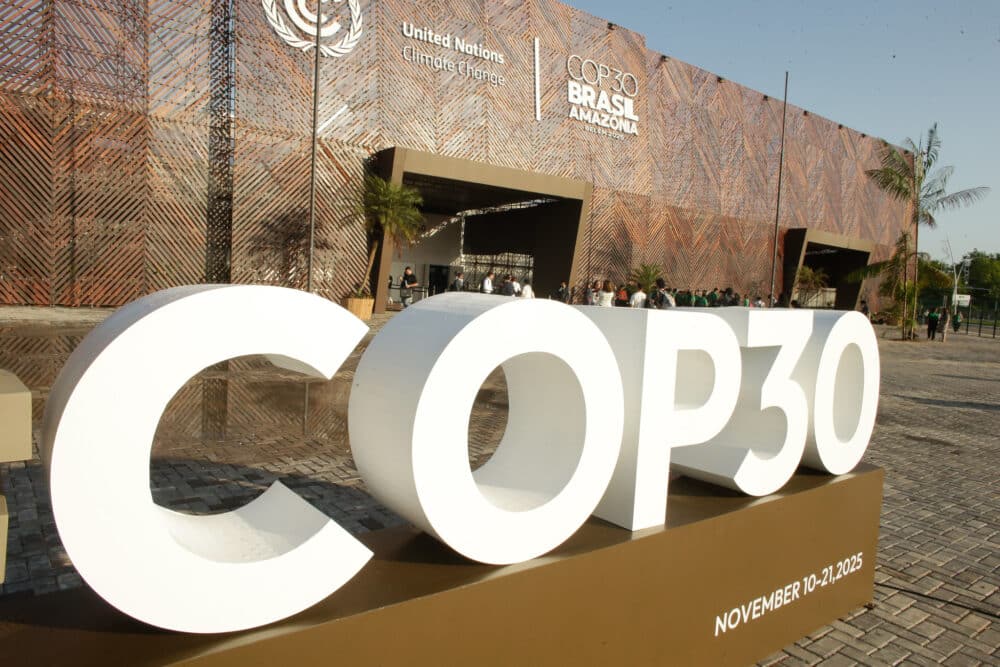
A few days before the official start of the 30th global climate summit (COP30), in the Brazilian city of Belém, WWF Portugal calls for “climate leadership” from Portugal and the European Union (EU).
In a statement, the Portuguese environmental organization notes that the country will arrive at the first climate summit in the Amazon with a National Energy and Climate Plan (PNEC 2030) that anticipates carbon neutrality for 2045 and raises to 51% the target for the share of renewable energy in final energy consumption by 2030.
In addition, Portugal also carries in its baggage a proposal for the new National Strategy for Adaptation to Climate Change (ENAAC 2030), in public consultation until November 30, and which “reinforces the need to integrate adaptation as a central pillar of the national climate policy”.
Although it recognizes the “advances” that the country has made in climate action, WWF Portugal warns that it is necessary “to move from ambition to execution, with concrete measures, clear mechanisms for implementation and monitoring, funding and adequate technical means”. It adds that it is also “fundamental” to define “a detailed and binding timetable” to end all subsidies and public support for fossil fuels, “redirecting these resources to policies for a just transition”.
This week, the EU environment and climate ministers finally reached an agreement on the target of a 90% reduction in greenhouse gas emissions by 2040. However, it describes the decision as “disappointing” and in contradiction with science, because the target concerns a “net reduction” that will not have to be achieved exclusively within the EU’s borders.
This is because the agreement provides “flexibilities” that allow the use of international carbon credits to cover up to 5% of the target, “despite the credibility risks of these credits,” according to WWF, noting that the Portuguese government “has positioned itself in favor of international credits” and also a new emergency clause that “allows the review of the 2040 target if the estimated level of natural removals does not meet expectations”.
The organization says that the position taken by Portugal, and other member states, is negative and “signals a weak commitment to restoring and protecting natural carbon sinks, at a COP that should have as one of its banners the goal of stopping and reversing deforestation by 2030”.
In order for COP30 not to be a disappointment and truly mark the beginning of a “new phase of climate action”, WWF says it is essential to reinforce European and national climate leadership, “ensuring coherence between rhetoric and practice”, to make the summit “a turning point in the direction of full integration of the synergies between climate and biodiversity in all national strategies” and to mobilize society at large, including governments, companies, universities and citizens, for “a just, green and inclusive transition”.