In the heart of the Alps, engineers are putting the final touches on a project that looks straight out of a sci-fi movie.
After nearly two decades of drilling, blasting, and innovation, the world’s deepest and longest road tunnel is almost finished — and it’s about to redefine how Europe moves.
Once open, this massive infrastructure project will not only connect regions faster than ever before but could also save drivers up to 10 hours of travel time on some of Europe’s busiest routes.
A Record-Breaking Feat of Engineering
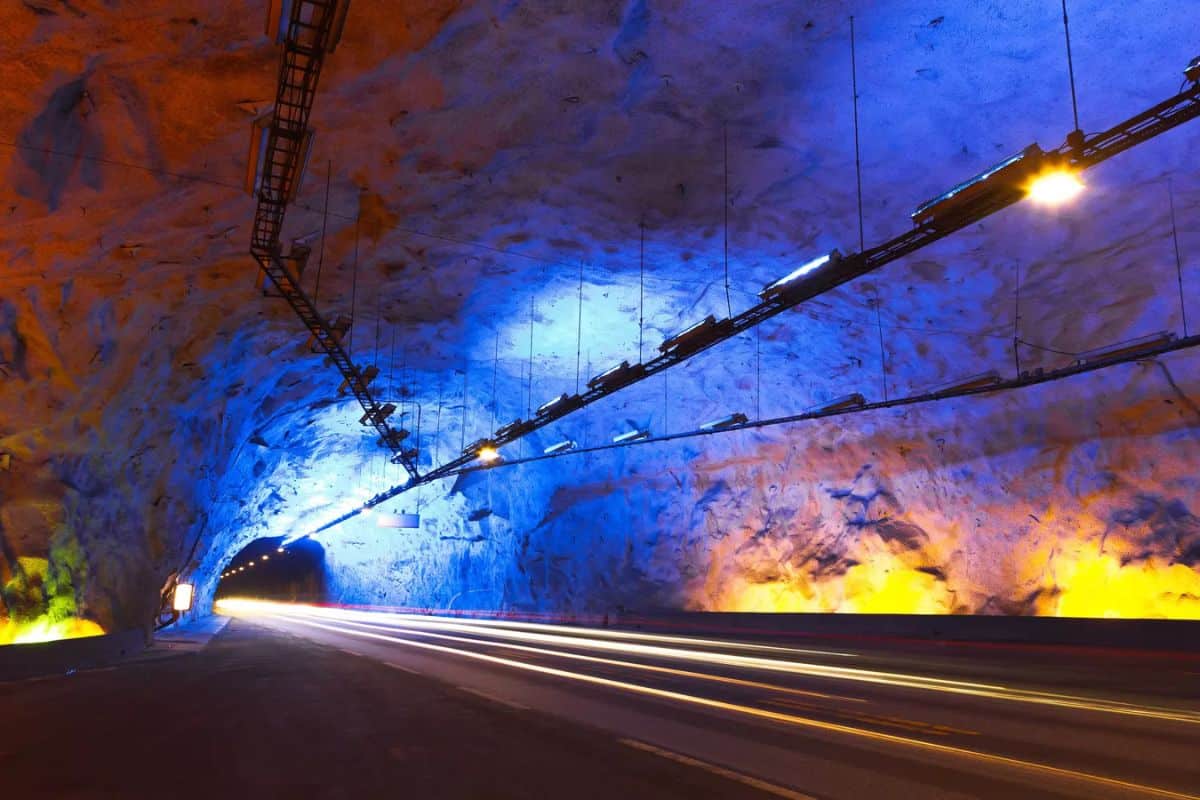
Known as the Lyra Alpine Tunnel, the project runs beneath the Swiss and Italian Alps, stretching more than 64 kilometers (40 miles) at depths exceeding 2,500 meters below the surface — making it the deepest vehicular tunnel ever built.
Construction began back in 2007 with the goal of creating a direct high-speed corridor between Zurich, Switzerland, and Bologna, Italy.
Until now, this journey has required navigating steep mountain passes, winding roads, and heavy truck traffic, often taking over 12 hours in winter conditions.
When the tunnel opens — expected in late 2026 — the same trip could be completed in just over 2 hours.
“It’s not just an engineering achievement — it’s a revolution in mobility.
We’re connecting countries, reducing emissions, and giving back time to millions of people.”
— Elena Rossi, spokesperson for the Lyra Project Consortium
How It Works: A Highway Beneath the Mountains
Unlike most Alpine tunnels, the Lyra Tunnel will feature two parallel tubes, one for each direction of traffic, with an emergency gallery in between.
Each tube will host a three-lane highway equipped with smart sensors, adaptive lighting, and autonomous-vehicle compatibility.
The design allows cars and trucks to travel at constant speeds of up to 120 km/h (75 mph) without the usual slowdowns caused by snow, fog, or altitude.
The entire structure is reinforced to withstand rock pressures of up to 400 bars, and the ventilation system uses AI-controlled airflow to ensure fresh air and minimal pollution buildup.
Key technical highlights:
- Depth: 2,500 meters (8,200 feet) below the Alps
- Length: 64 km (40 miles)
- Construction time: 19 years
- Excavated rock: Over 35 million tons
- Energy savings: Estimated 40% lower fuel consumption for trucks
- Travel time reduction: Up to 10 hours on transalpine routes
Environmental and Economic Impact
The Lyra Tunnel is not just about speed — it’s also about sustainability.
By diverting freight and car traffic underground, the project aims to reduce surface congestion and carbon emissions across the Alps, one of Europe’s most fragile ecosystems.
According to preliminary studies, the tunnel could remove up to 12,000 trucks per day from mountain roads, cutting annual CO₂ emissions by nearly 2 million tons.
It will also reduce noise pollution in Alpine villages, improving quality of life for local communities.
Economically, experts estimate the tunnel will generate €4 billion in trade benefits and tens of thousands of jobs through increased logistics efficiency between Northern and Southern Europe.
“The Alps have always been a barrier.
Now, for the first time in history, we’re turning them into a bridge.”
— Dr. Matteo Langen, civil engineer and project advisor
Challenges Beneath the Surface
Building such a colossal tunnel hasn’t been easy.
Engineers had to battle extreme underground temperatures reaching 45°C (113°F), unstable rock formations, and unexpected groundwater pressure.
At one point in 2015, drilling operations were halted for nearly a year after a major collapse 18 kilometers in.
To overcome these obstacles, the team deployed the world’s largest tunnel boring machines (TBMs), each weighing over 3,000 tons.
They also pioneered new cooling and stabilization systems, now considered benchmarks for future deep-earth projects.
A Glimpse Into the Future of Transportation
When it opens, the Lyra Tunnel will symbolize a new era in infrastructure — where distance and geography are no longer barriers.
The route will seamlessly connect Central Europe with the Mediterranean, serving as a backbone for passenger vehicles, freight, and eventually high-speed electric transport convoys.
Plans are already underway to integrate the tunnel into Europe’s growing smart mobility network, linking it with renewable energy stations and autonomous-driving corridors from Germany to Northern Italy.
For drivers, it means fewer hours behind the wheel.
For logistics companies, it’s a leap forward in efficiency.
And for the planet, it’s a sign that innovation can coexist with preservation.
The world’s deepest tunnel is more than a shortcut through mountains —
it’s a symbol of human ambition, reminding us that even beneath tons of rock and darkness, light still finds a way forward.