A symbolic purchase that redraws the map
When an American buyer orders a Chinese-built 60 kW fiber laser, the move speaks to shifting industrial confidence rather than mere procurement. What once looked like a one-way transfer of advanced tools from West to East now appears decisively bidirectional. The decision lands as a strategic pivot, signaling that performance, not provenance, is the new competitive currency.
Why this machine matters
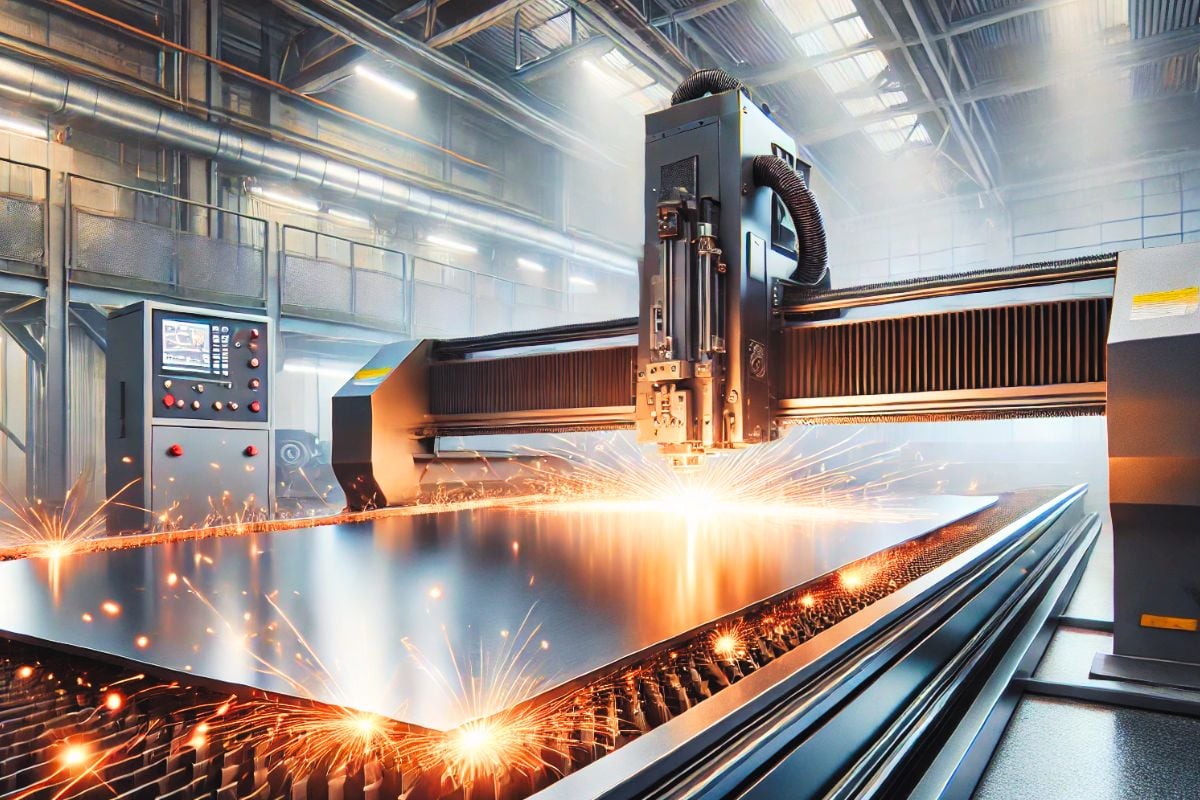
Built by Penta Laser in Zhejiang, the 60 kW system cuts 20 mm carbon steel at a blistering 11–12 meters per minute. Earlier 20 kW platforms plateaued near 3.5 m/min, making the jump a genuine step-change in throughput and capability. This is the first of its kind to enter the American market as a production-ready workhorse, not a curious prototype.
Specs that change the factory floor
Beyond raw speed, the machine brings a 3 x 13 m work area and 0.03 mm precision for large parts and tight tolerances in one continuous flow. Automated loading and unloading compress turnaround, while bevel cutting unlocks complex geometries that once required multi-stage lines. The net effect is a faster march from digital CAD to a finished, inspectable part.
- A massive, vibration-stable bed for large-format plate stability
- Automated material handling that reduces labor and machine downtime
- High-accuracy bevel cutting that streamlines welded-joint prep
- Consistent edge quality that trims post-process finishing
- Software-driven control for repeatable, data-rich operations
Performance versus power: the 60 kW threshold
Engineers often chase bigger wattage, but physics and economics don’t scale linearly. As power rises, efficiency gains flatten while energy and maintenance costs surge, producing diminishing returns across industrial systems. The 60 kW line marks a sweet spot where speed, precision, and cost converge into practical deployment.
“As we push beyond 60 kW, efficiency gains become marginal while cost and energy use rise sharply,” said Penta Laser’s Wu Rangda, highlighting the balance between peak performance and realistic uptime goals. That logic resonates at facilities constrained by power pricing, grid capacity, and contractual deadlines.
Practical advantages on the shop floor
At 60 kW, operators can nest thicker plates and still hit aggressive schedules without deploying multiple lower-power cells. One high-capacity machine can shrink plant footprints, cut fixtures, and simplify material flow across shifts. Bevel capability trims downstream welding prep and supports high-integrity joints in aerospace, shipbuilding, and heavy equipment.
Fewer handling steps usually mean fewer errors, better traceability, and shorter lead times for mission-critical parts. In competitive bids, the difference between 3.5 m/min and 12 m/min can determine the contract as well as the overall program timeline.
A global market realignment
Penta Laser’s order book is swelling across the United Kingdom, Japan, and the Netherlands, proof that performance paired with price can move entrenched markets. The center of gravity in fiber lasers has tilted toward Asia, with Chinese suppliers setting more of the pace and fewer of the follow-ups. Western incumbents still command immense respect, but the scoreboard is now truly global and fiercely dynamic.
Brands like Germany’s Trumpf, Switzerland’s Bystronic, Japan’s Mazak, and stalwarts such as AMADA and Trotec will not stand still. When American factories import Chinese flagships, the technology is validated on the buyer’s home turf and the narrative of leadership gets reframed.
What it means for American industry
Buying the best available tool—regardless of origin—has long been a very American response to pressure. If the Chinese option is faster, cleaner, and more flexible, adoption becomes a shop-floor decision, not an ideological stance. The immediate outcomes are concrete: higher throughput, steadier quality at scale, and stronger quote confidence in crowded bid windows.
Exposure to leading controls, bevel strategies, and data-rich workflows could also spark local innovations and cross-border partnerships. In a tight labor market, automation that removes minutes per cycle adds up to weeks across whole programs and supply chains.
The next competitive cycle
Expect intensified responses centered on total cost of ownership, smarter automation, integrated inspection, and lower energy per part cut. As benchmarks rise, software, sensing, and service will differentiate more than raw wattage. The sharper the competitive edge, the louder the demand for tools that make that edge real.
For now, the 60 kW threshold stands as a new baseline, and the American purchase amplifies a clear signal: performance has crossed a line even the most discerning customers cannot ignore. The map has shifted, and capability—not nationality—defines who leads the industrial frontier.