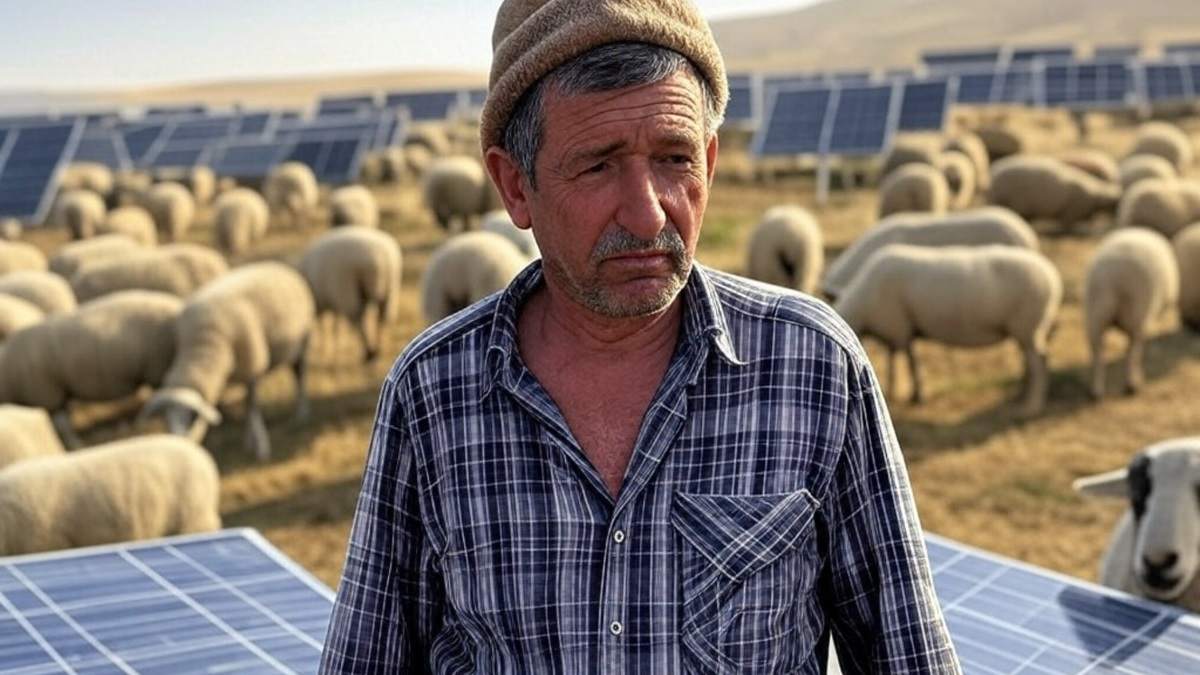
The Intermunicipal Community (CIM) of Beira Baixa issued a negative opinion on the Sophia photovoltaic solar plant project, within the scope of the public consultation, due to the enormous impacts on the community and the territory.
“The Intermunicipal Community of Beira Baixa aligns itself with the municipalities of Idanha-a-Nova and Penamacor, and expresses opposition to the realization of the Sophia photovoltaic solar plant project,” the community explained in a press release sent today to the Lusa agency.
The Beira Baixa community’s pronouncement regarding the intention to install the Sophia photovoltaic solar plant, as well as the associated high-voltage lines, comes on the last day of the public consultation on this project.
The Sophia photovoltaic solar plant covers the municipalities of Fundão, Idanha-a-Nova, and Penamacor, in the district of Castelo Branco, and represents an investment of about 590 million euros for an installed capacity of 867 MWp (Megawatt peak).
It is a project with 390 hectares of area occupied by photovoltaic modules, 435 hectares considering all infrastructures, and a total of 1,734 hectares of fenced-off area.
“It is, therefore, a project that has enormous impacts on the Beira Baixa community and territory,” emphasized the spokeswoman.
The community argued that the energy transition should unfold in a balanced manner, with respect for land-use planning, the environment, biodiversity and geodiversity, the productive potential of agroforestry spaces, and the quality of life for both residents and visitors to the territory.
“Beira Baixa is distinguished as a stage for unique natural landscapes and a habitat for exceptional natural values, which justify the designation of significant parts of its territory with different and important statuses – protected landscape, natural monument, natural reserve, natural park, special area of conservation, special protection area, global geopark, biosphere reserve – to which are added the Terras do Lince territory (European Charter for Sustainable Tourism) and two bioregions (Idanha and Lusitânia).”
In this sense, the community believes that the articulation of land uses is of crucial importance and that balanced management is essential to safeguard the preservation of the agricultural and forestry suitability of the soils, and to take into account the sensitivity and ecological value of the different areas.
“The rural territory of Beira Baixa is also recognised for hosting Historic Villages, Stone Villages, and a vast historical, tangible and intangible heritage that make up a richly cultural landscape. The classifications that the territory bears reflect balance in resource use, preservation of soils and nature, and the enhancement of local traditions.”
The community also explained that, regarding the assessment of the project, it took into account the significant and continuous expansion of the area expected to be artificialized, the detrimental consequences, given the scale of the installation, on other land uses, and the non-negligible impacts on the conservation and production spaces covered, the habitats and protected fauna and flora species.
The Beira Baixa community comprises the municipalities of Castelo Branco, Idanha-a-Nova, Oleiros, Penamacor, Proença-a-Nova, Sertã, Vila de Rei, and Vila Velha de Ródão.